Author Archives: Dan Allison

Unknown's avatar

About Dan Allison

Dan Allison is a transportation advocate in Sacramento, CA. Dan dances and backpacks, as much as possible.

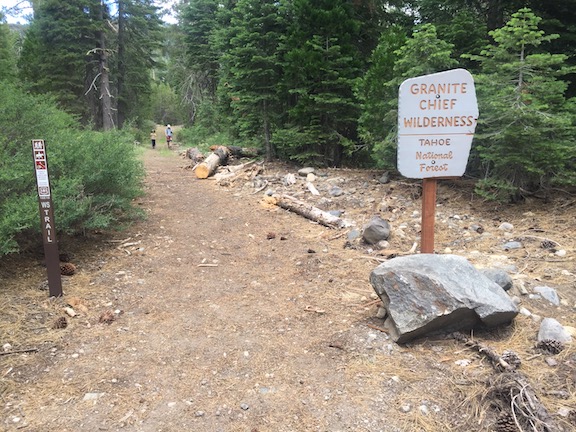
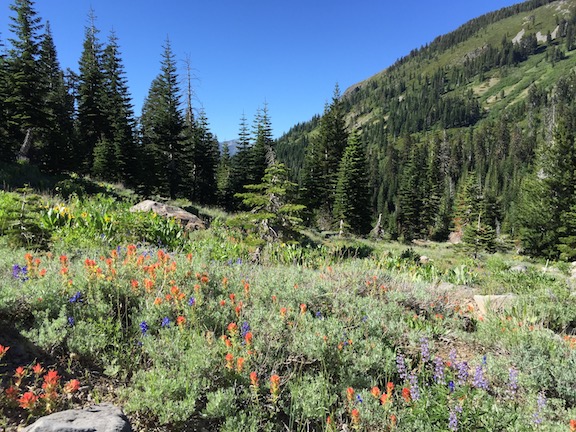
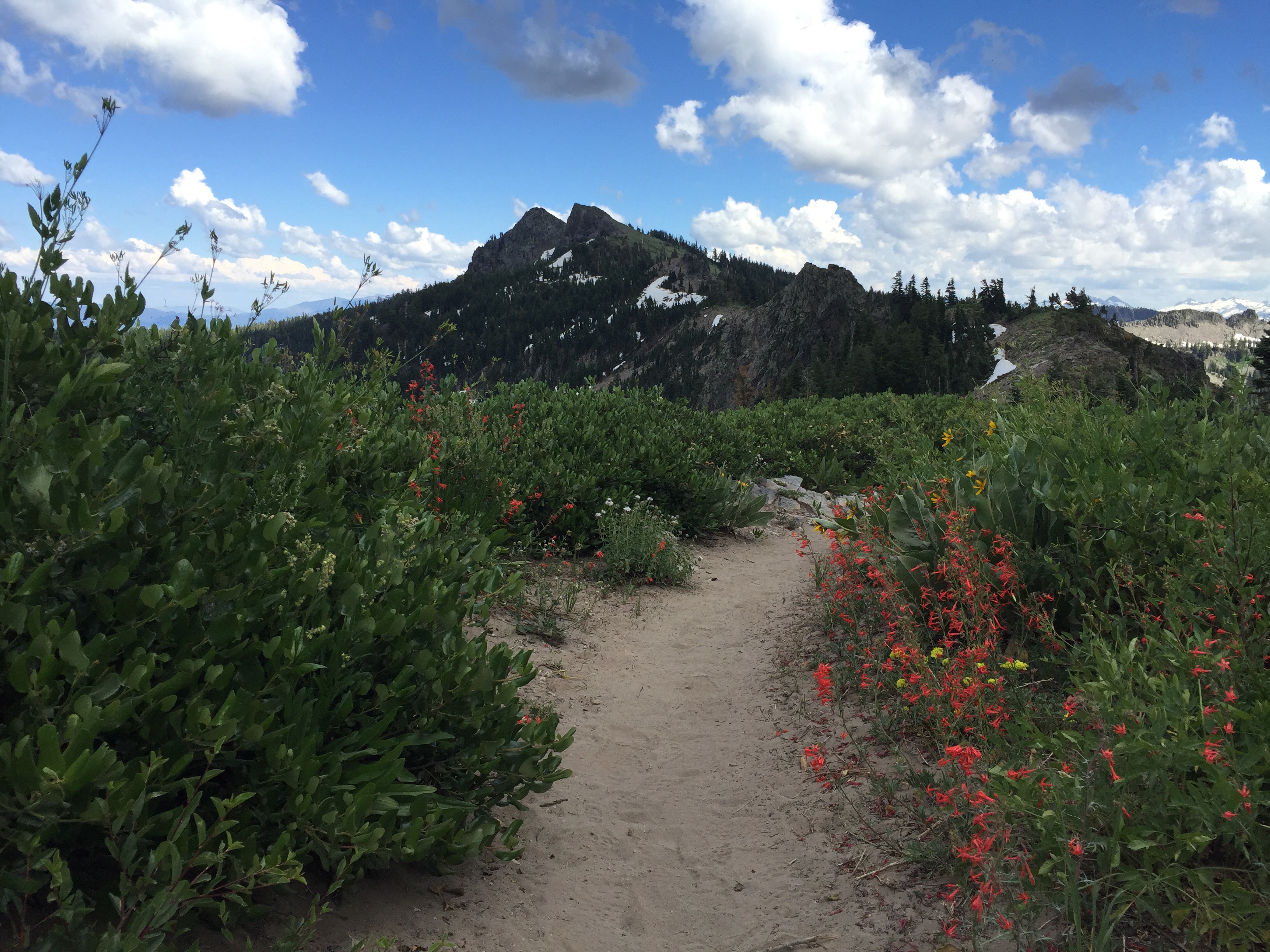
Granite Chief 2016-08

Note: this trip is LAST year, 2016, which I never got around to finishing, but here it is now. I like to post on every trip, in part so that I myself can keep track of trips and where I went. 

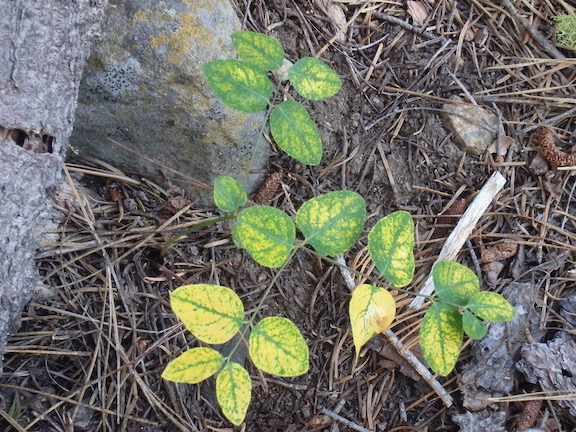
A dry year, dogbane turns color early

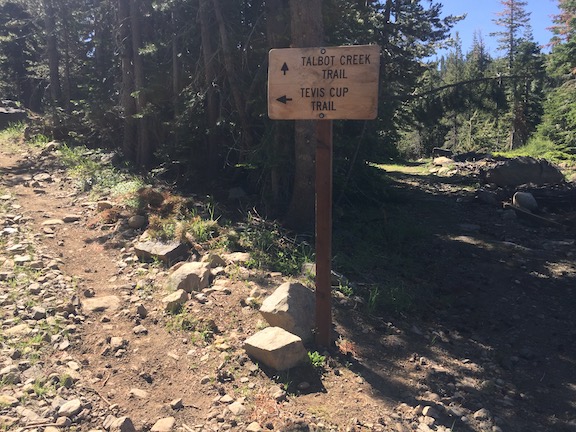
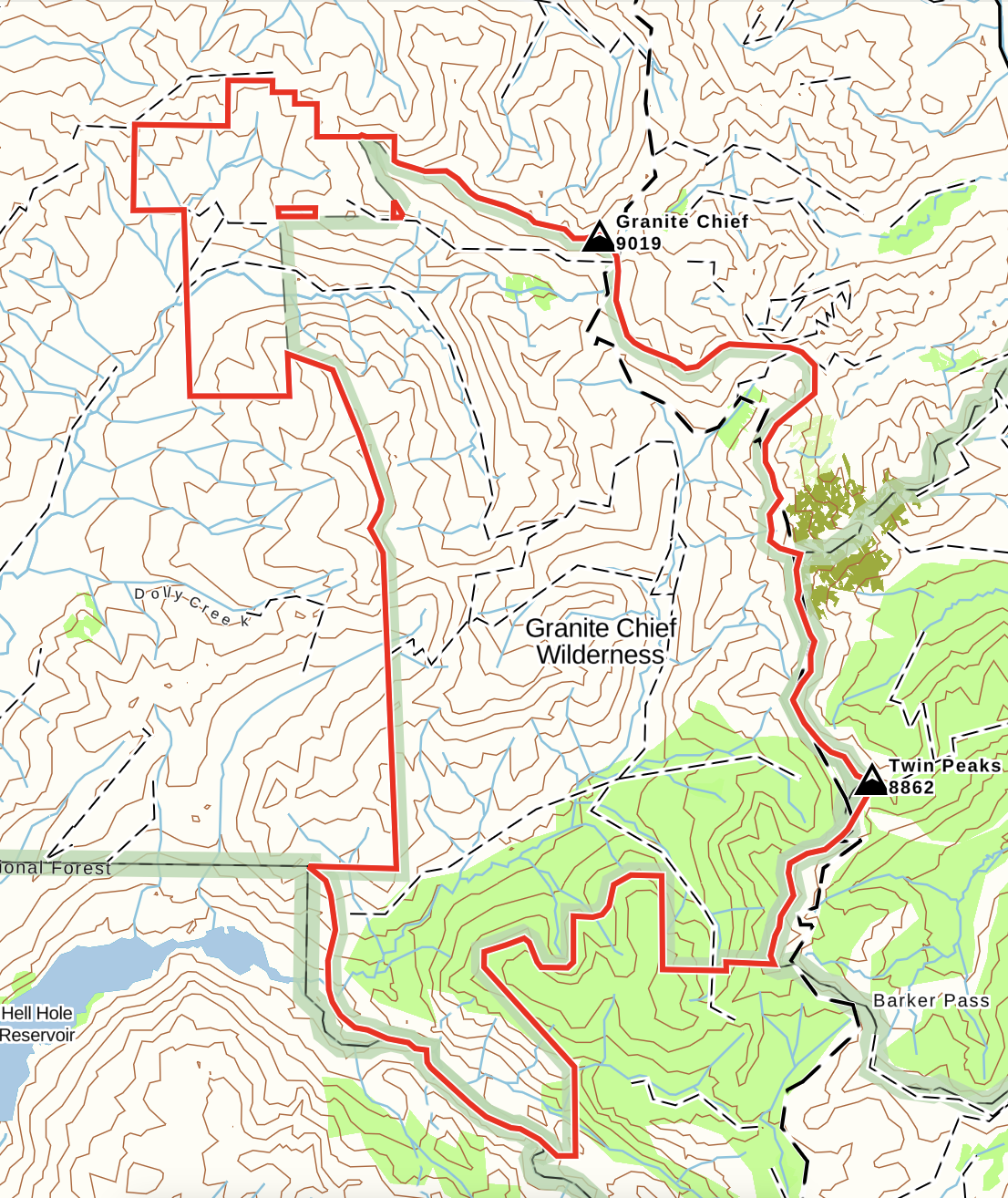
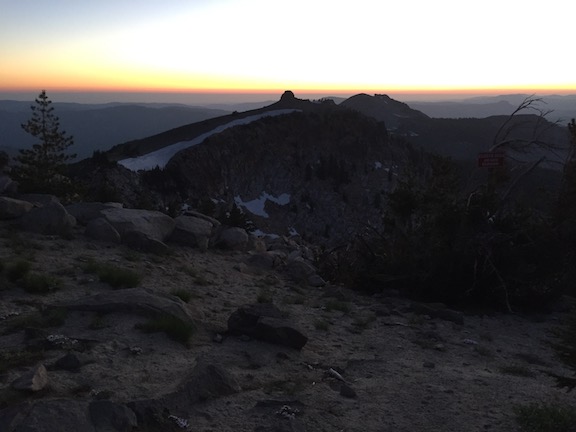
I went in at Squaw Valley (bus stop) and up Granite Chief Trail to Granite Chief saddle  where I camped for the night. The next day I walked out the Tevis Cup Trail and what I call the Tevis Cup Connector, one of the old Western States Trail alignments. Tevis Cup is easy to follow and has great views, but the trail itself is unpleasant,  climbing and descending repeatedly for no good reason, and poorly maintained. The end of the trail has been re-aligned off a gravel road onto a trail that goes past old ranch or FS buildings (not sure which), but ends at the same green gate as the old route. The Tevis Cup Connector is faded and jhard to follow in some places, as it descends and crosses the Middle Fork American River and then climbs to join the Tevis Cup. 

I headed south on the PCT, doing some spot brushing along the way, and continued to Barker Pass, to Powderhorn Trail and back into the wilderness. Powderhorn is in decent shape on the upper third and lower third, but almost completely brushed in in the middle third, with whitethorn and doghair fir. I camped at Diamond Crossing, explored Bear Pen trail which I’d not beeen on in several years. It is in decent shape, not too hard to follow, but where it crosses Bear Pen Creek before the meadow, eroded banks make it necessary to climb down and back up, awkward with a pack. 

Some sort of bee or wasp is incredible abundant, everywhere but particularly along the edges of creeks. Yellow and black striped body, but no fuzziness and no constriction between the thorax and abdomen. Not sure what it is. Also saw a lot of grouse on this trip, at least 40. 

I went out Five Lakes Creek Trail, which has received some logging out, perhaps by the horse trip that comes in once a year to a Big Spring meadow, and then out to the Five Lakes trailhead. And back to Truckee by bus and back home on the train. 

Photos on Flickr; Granite Chief collection

First trip, down Five Lakes Creek

For my first trip of the season, July 4-10, much later than recent years, I headed in at the Five Lakes trailhead and went down Five Lakes Creek. There were only snow patches on the trails, and they would be gone by now. There are a few trees down as far as Whiskey Creek Camp, and a moderate amount of winter debris, the branches that come down over the winter and can be throw off if one has the time. From Whiskey Creek Camp southward, there are more trees and more debris, with the biggest issue being young firs bent over the trail. More snow than usual at these middle elevations bent these trees.

From Diamond Crossing south to Steamboat Creek, there are a lot of trees down, and a lot of winter debris. In fact, this trail segment has become quite difficult to follow. When you leave the trail to go above or below a fallen tree, it is very challenging to see the trail and get back on it, being so covered with debris that it looks just like the rest of the forest floor. If this trail doesn’t receive some maintenance within a couple of years, it is done for. Bears provide a lot of the trail maintenance on these lesser-used trails, and there is evidence that the bears are starting to prefer other, easier routes over the old trail, and if so, that is the beginning of the end. 

All of the named creek crossings were wet ones. Some are probably rock jumps now, but some may still be wet. The snow melt has created tread erosion in a number of places. No surprise. When you combine an almost complete lack of water control structures on the trails with a wetter winter, erosion is the result. 

I spent two days doing maintenance on the lower third of the Powderhorn Trail. The doghair fir is pushing into the trail, so the hiker has to push through it. I cut those back, so the trail is in good condition, with a bypass around one down tree. However, another down tree that can be bypassed by hikers may well be a barrier for equestrians since it is on a steep side slope in a dense forest. The real issues on the Powderhorn are in the middle third section, where doghair fir and whitethorn brush have essentially closed the trail. Though the alder section below the postpile formation has been an issue in the past, I’m guessing that it is still passable. I did not have time to work on the middle third, so good luck if you go there. 

I met a Forest Service wilderness ranger, Nathaniel, on the Five Lakes trail. This is the first time in many years that the Granite Chief has had dedicated staff, so I’m looking forward to more attention being paid. 

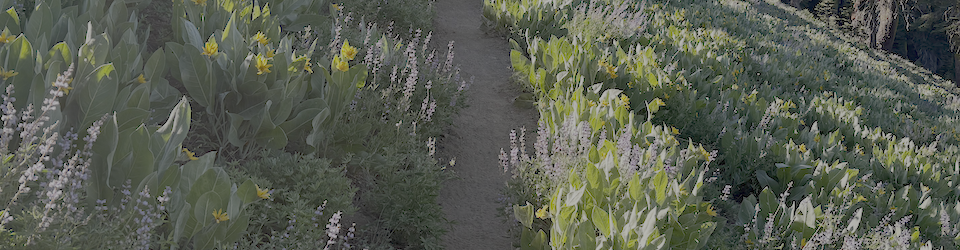
The flower show is just developing, with pentstemons, mules ears,and a few others. 

I did not go north or south on the PCT, nor any of the other trails in the wilderness, so have nothing to report on them. As always, I welcome comments from others on trail conditions, creek crossings, and water sources. 

Photos on Flickr

Snow?

People have been asking me about snow conditions in the Granite Chief, and I’m sorry to say I don’t have any information for you. I will be going in on a backpack trip Monday, July 3, and may have a chance to post briefly while I’m on that trip (there is some cell reception from the crest, though none in the rest of the wilderness), but if not, then at the end of the trip about July 11.

If you have information, or trip reports, please share them by replying to this post. If you had an approved comment in the past, your comment will go up immediately, if not, I have to approve it, but again, may be able to do that when I’m on the crest. If there is still a lot of snow up high, I’ll head down into the Five Lakes Creek basin, where the bears have never heard of cell phones.

I went backpacking this last week along two sections of the Bay Area Ridge Trail, in part because I figured there was still a lot of snow in the Granite Chief. But a week of very warm weather may have opened up some of the trails, and I’m anxious to get into the high country.

PCT trail maintenance trips

I’ve had two backpacks this year doing trail maintenance on the Pacific Crest Trail through the Granite Chief Wilderness. Since almost all my time was up on the PCT, I don’t have anything to report about the rest of the wildneress, but since I have two more backpack trips coming up, will have a report on much if not all of the trail system.

I brushed from Granite Chief trail on the north to Five Lakes Creek in the middle, and the trail is in good condition except for a short 0.1 mile part between Whiskey Creek Camp trail and Five Lakes trail that I didn’t get done, though it is not bad. I also did the Whiskey Creek Camp trail since it was getting a bit brushy. While in this area I spent some time exploring around Five Lakes Creek and Whiskey Creek, looking for the old trails that were there before the new PCT alignment was completed. In some places these old trails are easy to follow, but no always. I still think there is a trail on the south side of Five Lakes Creek to Big Spring Meadow, but so far I haven’t located it.

On the second trip I focused on the PCT north from the PCT/TRT trail junction near Twin Peaks. There are several sections here that are very brushy, and a few that are essentially closed in. I got all but one of these opened up again, to a point where they should be OK for about five years. But there is one very brushy section that I did not get to, and will be very bad by next year. It is about 0.2 miles. I did spot brushing on the remainder, and it is in decent shape but could use work. I think this year I accomplished what I have not in several years, keeping up with the rate of brush growth, though not gaining on it, which is why there are some badly brushed-in sections left. Next year perhaps I’ll get those last very brushy parts done, and be “caught up” at least for a couple of years.

PCT trail before

PCT trail before brushing, overgrown with tobacco brush

PCT trail after

PCT trail after brushing, cleared to five-year width


Continue reading

trail work on the PCT 2014-07

gcw_fivelakes-2

Five Lakes sunset reflection

Another missed trip.

This one was primarily a trail maintenance trip for the Pacific Crest Trail (PCT) along the ridge between Five Lakes and Twin Peaks. I went in at Alpine Meadows. Waiting until the next morning I had a chance to explore around Five Lakes which I’d not done in years, and do some brushing on the switchbacks up to the crest.

I planned on several days of trail work along the PCT between Five Lakes Creek and Twin Peaks, a section that doesn’t get maintained and tends to brush in. Ceanothus velutinus, commonly called tobacco brush, is the fastest growing brush, but other plants do their part. When I do brushing up on the crest I have to carry up enough water to camp with, so the trip up from the creek is heavy and slow. Unfortunately the blade on my loppers broke on the second day, and then on the third day the handle on my folding saw broke. These Fiskars tools are generally very reliable, lightweight, and easy to use, so this was unusual. But after completing only a portion of the work I’d hoped to, I just had to take off backpacking.

The springs in Blackwood Creek were lower than I’ve ever seen them at this time of year. I walked out Blackwood through some aspen restorations projects that seem to be having the desired effect, and caught the bus to Tahoe City. Overnighting there, I ran into a friend Jan Ellis who I’d not seen in years. Then breakfast in Truckee and home on the train.

Flickr: Granite Chief 2014-07-28

Rubicon & Desolation 2014-08

Big Meadow

Big Meadow

I missed posting about a trip last summer, so here it is. I did not notice until I was catching up on posting photos to my Flickr site that I had an entire trip not yet labeled and uploaded. I must have been waiting until the photos were up before I wrote a post, and then forgot about both.

I went in at Alpine Meadows trailhead, walking up from the TART bus on the highway. There had been thunderstorms during the day, but nothing by the time I got in. There were footprints and a few people between the trailhead and Whiskey Creek Camp, but nothing and no one past there. I camped the first night at Big Meadow, always a favorite campsite.

Continue reading

No Forest Service information

Tahoe National Forest, USDA Forest Service, has removed almost all information about the Granite Chief Wilderness from their website. There is one paragraph on their Special Places page, and that is all. Even that paragraph is incorrect. The wilderness includes the headwaters of the Middle Fork American River, not the North Fork. The map, description, and trailhead information is all gone. I suppose I should take it as a compliment that apparently they think my website is all you need to know, but still, it is a disappointment to see a public agency removing information rather than adding it.

brushing and strange weather 2014-06

I spent two days last week brushing part of the Pacific Crest Trail that runs through Granite Chief Wilderness. This section, north of the PCT-Tahoe Rim Trail junction by Twin Peaks, is one that I started working on in 2006, when I discovered that that trail was brushed closed and people were getting lost. The part I just did was nearly but not quite brushed closed again. Brushing by myself goes very slowly, particularly when I come to an area that has a lot of small stems instead of a few big ones. I finished about 200 feet of trail. There is about a half mile of trail remaining to do. Some plants get bushy when trimmed back, others grow again in the same pattern of a few large stems that can be pretty easily cut. I realized last year that unless I spent much more of my summers brushing than I wanted, I was not going to keep up with this brushy section. Nevertheless, I like doing the work and will continue to do some every summer.

PCT before brushing

PCT after brushing PCT before and after brushing

Continue reading

walking the ridges 2014-06

Last week I walked the ridges to the north and south of the Middle Fork American River. I’d looked at these ridges for years, thinking the scenery would be pretty cool, but had never gotten in a trip.

Lyon Peak Ridge, looking west from Granite Chief

Lyon Peak Ridge, looking west from Granite Chief

I went in at the Granite Chief TH in Squaw Valley, and walked the Granite Chief Trail and Pacific Crest Trail to the saddle beside Granite Chief. I walked up over the peak and continued west, past Needle Peak, over Lyon Peak, and on out the ridge to the saddle between Talbot Creek and Soda Springs. Though the ridge is not called Foresthill Divide in this section, it is a topographic extension of that feature that separates the North Fork American River from the Middle Fork. There is a clear use trail from Granite Chief to the saddle above Needle Lake, so I assume the destination for many is the lake. Again, there is a prominent use trail, part on old logging roads, from the Foresthill Divide saddle east on the ridge. But in between, the trail is vague, indicating that not many people walk the entire length. Though it is somewhat rough, there is nothing too challenging. I skipped going up Needle Peak due to the wind. The wind was blowing at least 30 mph the entire day, with gusts to 50 mph, and one gust that knocked me to the ground and prevented me from getting back up was at least 60 mph. The south wind, and the cold that came with it, was not in the forecast. It was an intense day, with the constant roar of wind in my ears and the need to re-balance with every step to keep from falling. And it was exhilarating!

Continue reading

Greyhorse Valley report

head of Greyhorse Valley

head of Greyhorse Valley

A trip report and photos from Keith Wootton on the Greyhorse TH and trail.

Like your website, and love granite chief wilderness. Here is the latest on Greyhorse Creek.  Rode motorcycle in, 10 miles of dirt road, no road markers and it is possible to take some wrong turns.  Seven miles of the road have water bars about every 100 yards, and some trees and large rocks on road. Lots of rock up to baby head size, and the water bars are high, not something to take a car on.  High clearance vehicle, bike, horse, or motorcycle are good. It took me about an hour to get to the trailhead, from French Meadows, which has a Granite Chief map but no other designation. Road beyond trailhead gets worse, and steeper, and I decided I really didn’t need to go to roads-end and another trailhead, although i could have made it, just slow going. Any other method of travel would take more time than motorcycle (i rode up from Foresthill).

Shanks Cove and towards Five Lake Creek

Shanks Cove and towards Five Lake Creek

Trail starts out faint for the first 100 yards, then runs into a sprawling mass of large uprooted  trees that make the trail hard to follow, as you cross a melt water creek and push your way thru a willow thicket. Trees are recently blown over and all from the north, some have root balls 15 feet tall!  I dont think there is any way a horse is going to make it thru. After that trail becomes much better as it switchbacks up between two meltwater creeks. About 2/3 way up hill, trail gets faint, then lost. Working up and to north towards bare rock outcrop with out crossing creek until you get close to rock will reward you with an easy to follow trail tread to the trail fork at the saddle. I continued north, and trail was easy to follow as it climbs, then drops down into Picayune Valley, though there were many more blown down trees.  All with drying needles, and all from the north.

I gave up before reaching the valley, I got a late start, travel time was more than I thought, and it took some time to find my way thru all the down trees. I did do some exploring around, and think next time I will cross the saddle at the top of Greyhorse Valley, get a better look at the Johnson monument, and continue towards Mildred Peak and lakes.