Tag Archives: Granite Chief Trail

Granite Chief 2025-08-05 trail work

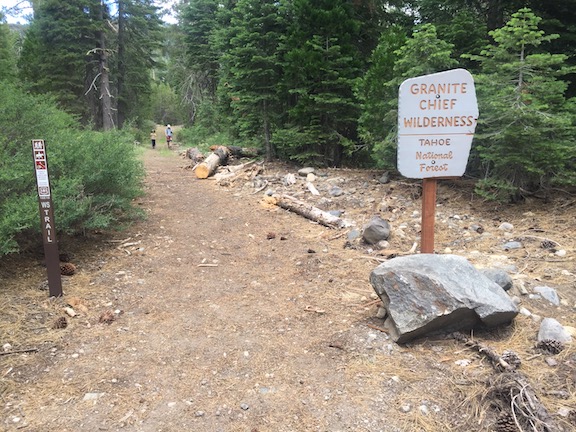
My fifth trip of the season was primarily for trail work. As I do when I can, I attended Palisades Tahoe Bluesday on Tuesday evening, camped out on the Granite Chief Trail, and next morning headed up the trail, south on the PCT, and into the wilderness. I’ve been walking a lot on the PCT, and have ignored the needed trail maintenance. I realized that I don’t consider it my responsibility any more. There are plenty of other trails that no one else would work, and the PCT should really be maintained by people who have done the PCT, to give back to the trail that provided them their experience. The wave of PCT thru hikers has passed, but a few are still struggling northward.

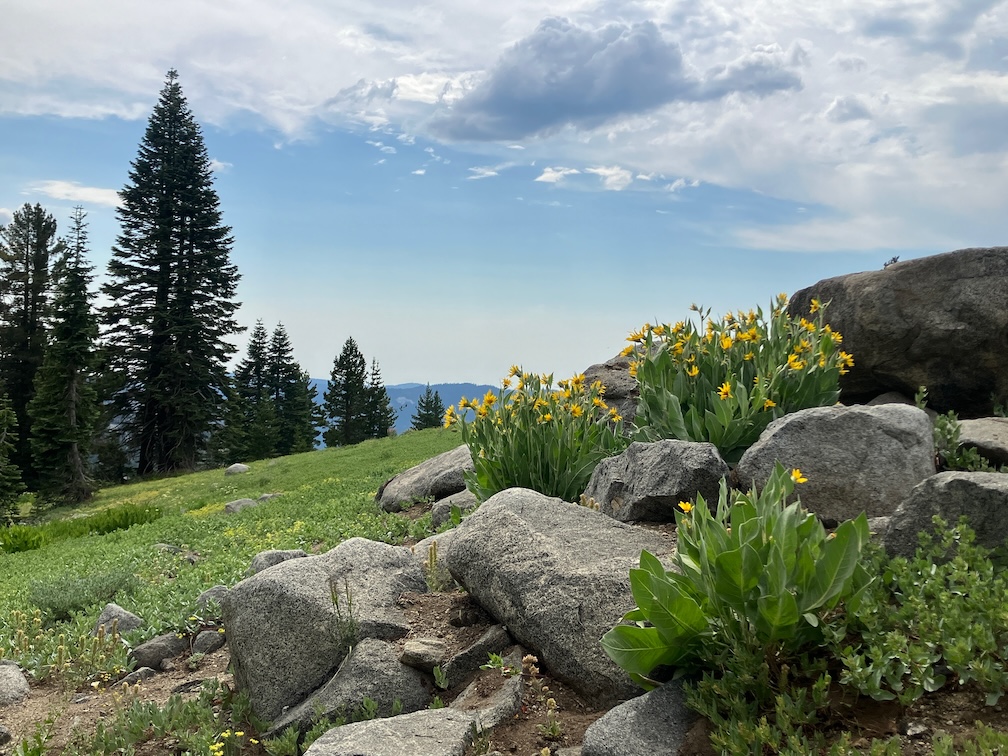
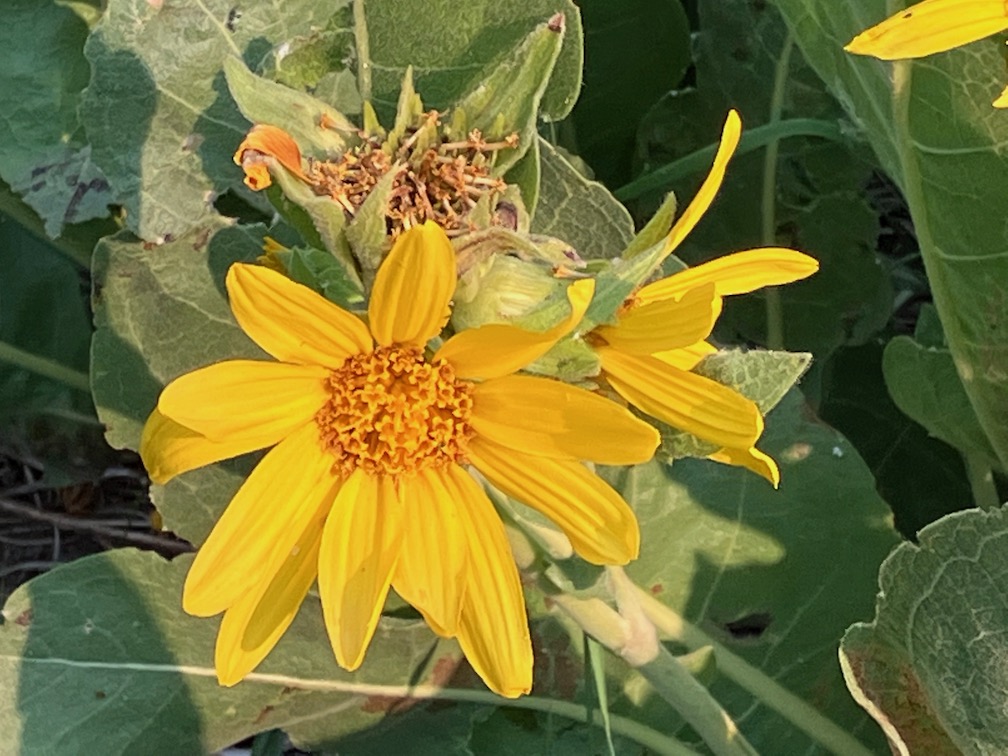
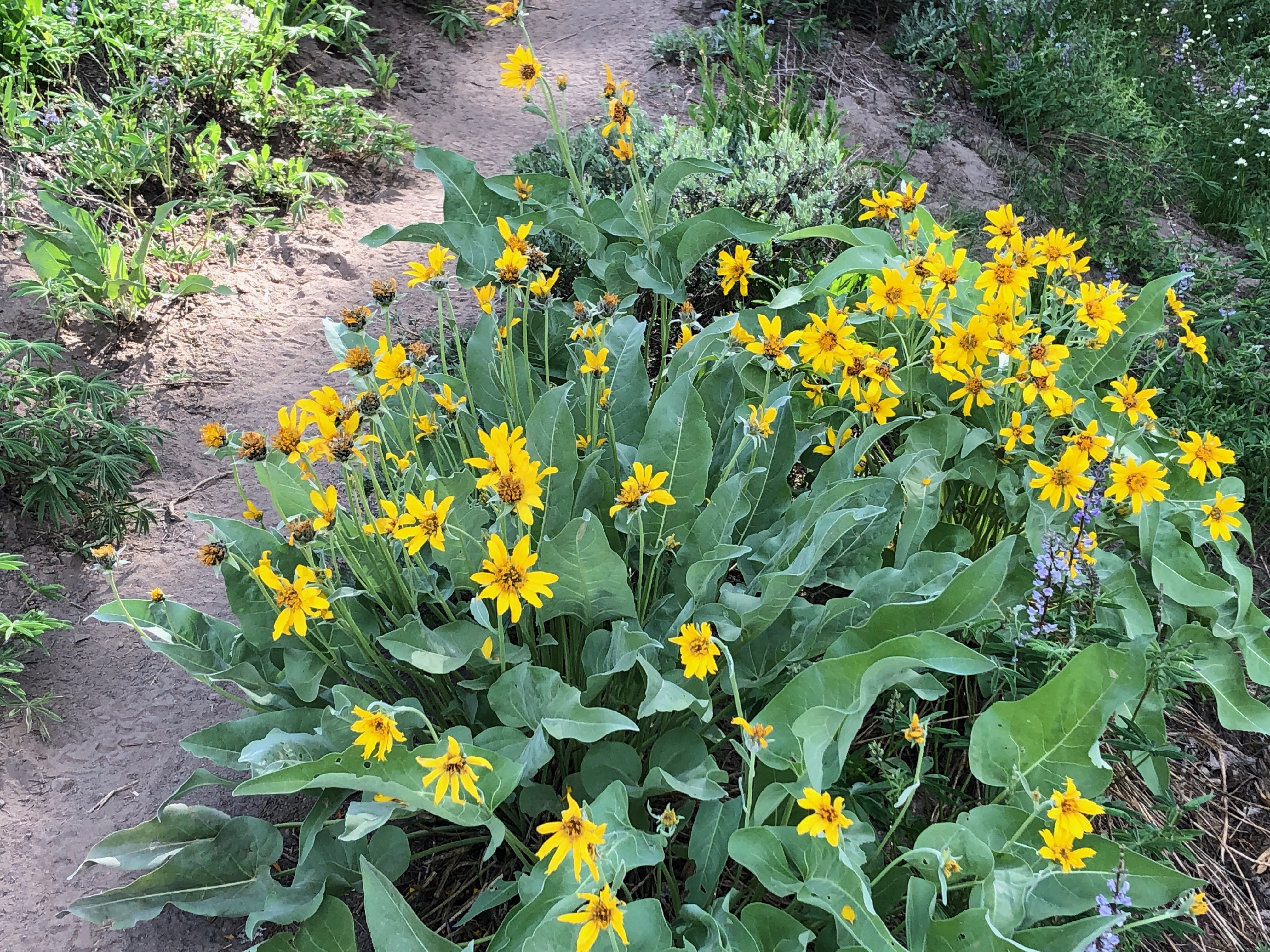
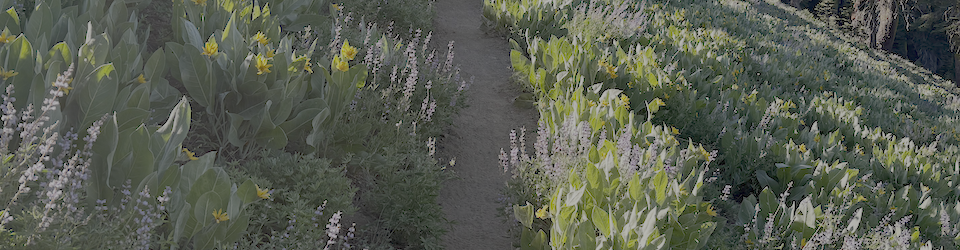
Wooley Mules Ears are starting to yellow- and brown-out for the fall, while the less common Arrowleaf Balsamroot turns a brighter yellow. Here and there are touches of fall color.

I checked out the route to Little Needle Lake and basin. This trail was partly maintained and heavily used by the CCC trail crew last summer, so is now easy to follow. The junction with PCT is just south of the Middle Fork Trail junction, and is not obvious. It is not an official trail, so probably won’t ever have a trail sign. Passing the Whiskey Creek meadow, a blond and brown black bear was tearing up a dead log, apparently finding morsels to eat, but ran off when it noticed me. I’ve seen quite a number of grouse, and some quail, in addition to the ubiquitous juncos.

I camped at Whiskey Creek camp. Two other backpackers were in, using my favorite camp site. I talked a while with them, and noted that this area used to get a lot more use. I would almost always see families camped there on weekends, and others during the week. No more.

I spent the next two days working on the Five Lakes Creek Trail, south from Whiskey Creek. I brushed, removed winter debris, defined bypasses or climb-overs of large down trees, and cut a few smaller down trees and leaners. I did 1.4km, to the creeklet crossing, about 2/3 of the way to the Big Spring trail junction. My objective was to the junction, but the work was slow, particularly working snowberry which has to be taken out by the roots to keep it from bushing out the next year and blocking the trail, and gooseberry with its sharp prickles on stems and seeds. Whitethorn is past its gentle early summer phase and extract blood. The photo below is approaching the creeklet crossing. Doesn’t look like much, but it was an impenetrable thicket of alder and yearly growth before.
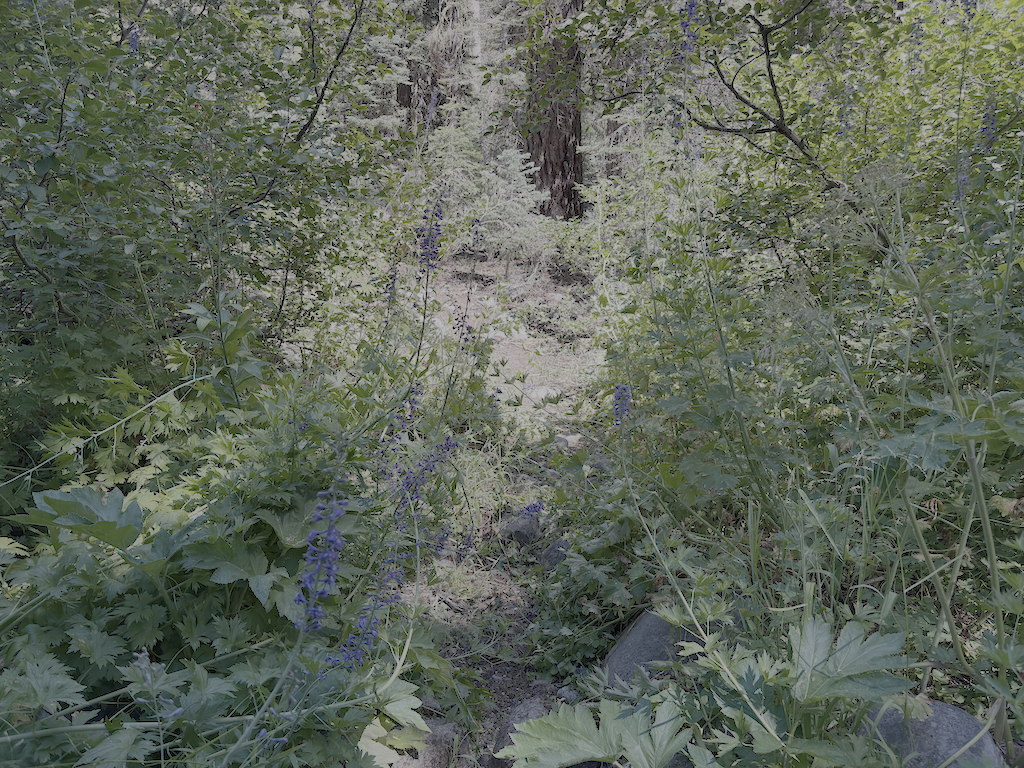
photo of cleared Five Lakes Creek Trail creeklet crossing
cleared Five Lakes Creek Trail creeklet crossing

A dirt bike has been ridden on the Five Lakes Creek Trail, damaging the trail tread and scarring some meadow areas. I don’t know who this is, it has happened at times I’m not in the wilderness. It may have even been a Forest Service person, as there are rogue employees who do this sort of thing. I was a wilderness ranger for years, and this deeply offends me. If I ever catch them, there will be hell to pay. The linear tracks of a dirt bike become conduits for water erosion during thunderstorms and snow melt.

I camped at ‘Squaw’ Saddle above the ‘Squaw’ Saddle Trail, overlooking Olympic Valley so I had cell phone reception to prepare for a Saturday Zoom meeting. I decided to go out through Olympic Valley to avoid walking Alpine Meadows Road from the Five Lakes Trailhead to the bus stop at River Ranch. In the morning, I followed the old ‘Squaw’ Saddle Trail down the hill. It is steep and severely eroded most of the way down to the Western States (Olympic Valley) Trail, but that trail is in good condition. I realized that on my 2025-07-01 trip, I veered off the Western States Trail, missed a trail junction, so my description of the upper part of that trail is in error. Once on the trail, I began to remember having walked this section years before. It is still not signed, but is clearly the correct trail. My route on GaiaGPS is correct, more or less. Ironically, the one Western States Trail sign provided by the ski area is incorrect, it is NOT on the WS Trail, but on an access trail to the WS. Shown below.

I have surveyed all the significant trails of the wilderness this season, except Hell Hole Trail and the related complex of paths at the bottom of the Hell Hole Trail, along Five Lakes Creek and the Rubicon River. This survey awaits a stretch of cooler weather. It was uncomfortably warm along the Five Lakes Creek Trail, 600 meters higher than Hell Hole.
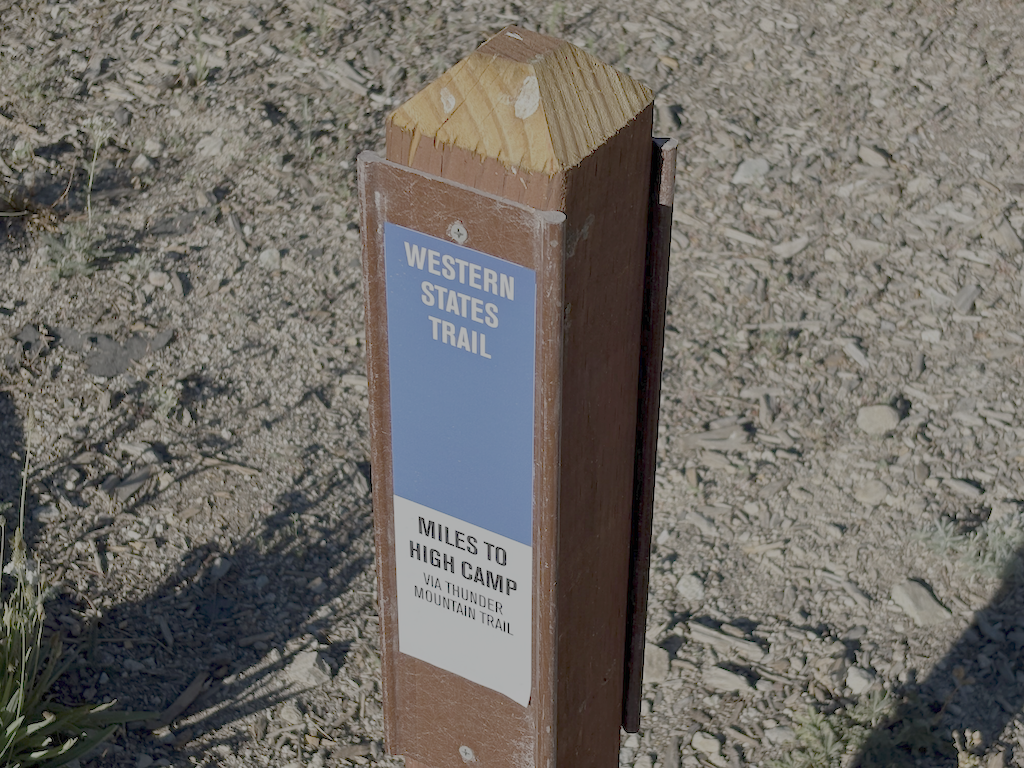
photo of Western States Trail sign at the WRONG location
Western States Trail sign at the WRONG location

Granite Chief 2025-06

My first Sierra backpack of the season! Rode to Truckee on the California Zephyr, and then Olympic Valley on the TART 89 bus. I enjoyed Palisades Tahoe Bluesday, then hit the trail to sleep out. Went up the Granite Chief Trail, which is largely in good condition. I took a side trip north on the PCT to North Fork American River, and then a short way down the Painted Rock Trail. A reader had asked me about that trail, so I wanted to at least know if it was still there and findable. It is, though hard to follow and not used so far this year. I’ve not used that trail in many years, but the challenge was the wet areas with alder and willow thickets where is was hard to follow the trail.

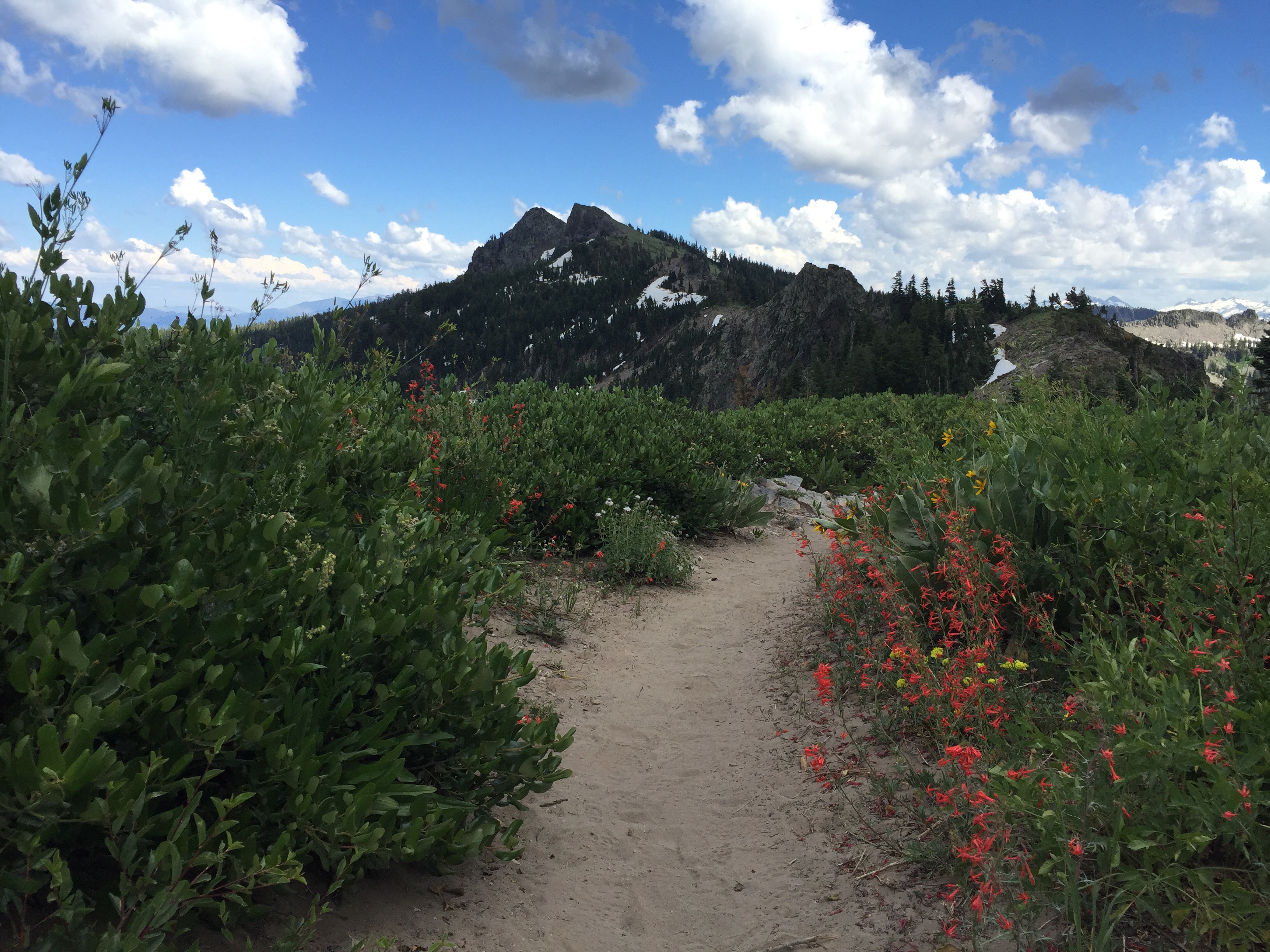
Then headed south on the PCT, I was intending to traverse north to south as a survey trip. But my attention was grabbed by the Tevis Cup Trail reroute, which I’d written about last year in Granite Chief 2024-08 trail survey. There is no evidence of trail crews there this year, and information on Western States Endurance Run indicate that funding was canceled or held as part of the Trump destruction of the Forest Service. I walked the east end, which is more or less as it was last year, though one blast area has been reconstructed. The middle part is a bit more polished than last year, and extends a little further west though a meadow. I had been told last year that the flagging extended all the way west, but I was not able to follow it past a alder and willow riparian area, so it may or may not exist. I gradually descended through open forest and small meadows to rejoin the existing trail near the switchbacks (the nearly-flat switchbacks). I headed out to the trailhead at Forest Hill Divide (as I call it, it doesn’t seem to have an official name) where the Tevis Cup Trail continues west along the ridge, heading eventually to Auburn.

photo of Tevis Cup Trail and flowers
Tevis Cup Trail and flowers

Walked down the Talbot Creek Trail, which was constructed a few years ago, some following an old logging road and some newly constructed. It has a nearly-flat switchback section as well, probably the same designer. The trail is not much used. The southern end trailhead is not marked by any signage, nor is the junction of Forest Road 51 with French Meadows Road, which leads to the trailhead.

After a rest at Talbot Campground, I headed back into the wilderness on the Western States Trail, my favorite trail and location in the wilderness. There are a lot of trees down, joining those already down from previous years. And a lot of winter debris, heavy in some areas. Crossing Middle Fork American River is close to a rock-hop, but still wet. I used a log downstream. The wet areas beyond, particularly in the aspen grove areas, have dense growth that obscures the tread, though your feet can find it, and branches hidden away to trip you. Other than an area on the switchbacks to the saddle, and descending to Whiskey Creek, brush is not bad.

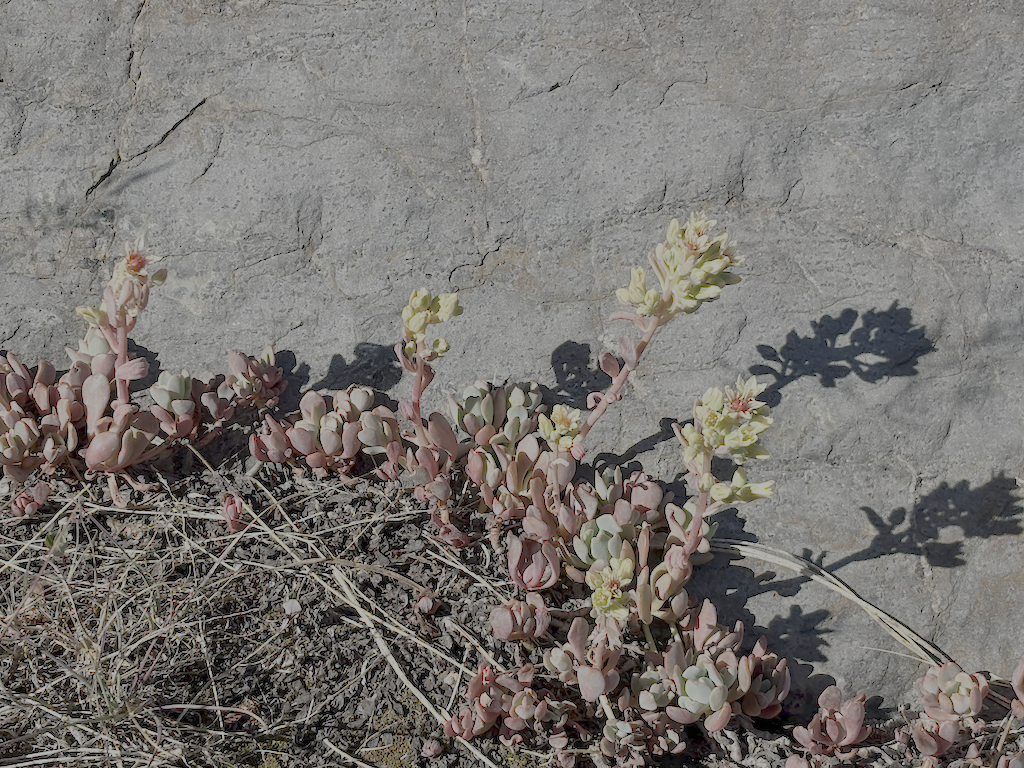
photo of Sierra stonecrop
Sierra stonecrop

I passed a group of eight backpackers headed along the Western States trip from Whiskey Creek, which is about as many as I usually see in a year. The crossing of Whiskey Creek has another tree down, blocking the rock-hop, but the large tree that has been down for several years makes a good crossing. Whiskey Creek Trail has a few rotted down trees, and one new small, otherwise in good condition. I camped north of the ‘Squaw’ Saddle Trail, at the divide between Five Lakes and Olympic Valley. With runners in the area for three events, including the Western States Endurance Run the next day, there were runners all over the place. Most place names have been changed away from ‘squaw’ but I don’t know if the trail name has been. This trail descended into Olympic Valley, and is the original trail route before the Five Lakes Trail was constructed.

Walked out the Five Lakes Trail, which is in good condition, caught the bus to Tahoe City, grabbed some items at Alpenglow Sports, best in the area, then back to Truckee on the TART bus, to Word After Word for a book, to Dark Horse Coffee in Truckee for tea, reading and writing, and then the Amtrak bus home to Sacramento. Whew!

Though plans are never certain, and I often change my mind, I think my next two trips are going to be for trail maintenance on the Western States Trail. Survey trips on the other trails will have to wait. It was hot enough at Talbot Campground/Trailhead, 1722m, that I think my trip on the Hell Hole Trail to the end at 1439m will get delayed until September, though I’m always looking for cooler stretches of weather.

Granite Chief 2024-07

For my second trip to the Granite Chief, I took the Amtrak bus up to Truckee, then TART to Palisades Tahoe. Attended Bluesday, the weekly blues music. The band was Mark Hummel, famous, so the event was packed. I camped off the old Granite Chief Trail at a place that I’ve settled in on for sleeping out after the music. In response to getting chewed by mosquitos on my last trip, I brought my inner tent with mosquito netting, though the mosquito clouds had fallen off to some degree.

As always, I checked the weather forecast for Tahoe City when deciding what to take. The forecast was zero percent chance of rain. But while going from Granite Chief Trail to Whiskey Creek Camp, it rained for about two hours, moderate rain, from a thunderstorm with lightning and thunder. It stopped late afternoon, and I was able to stay somewhat dry by sheltering in a hollow dead tree. There was a preview when it rained lightly for a short time the night before. In fact, it rained a bit every night on the trip, while every day the forecast was the same, zero percent chance of rain. Either these thunderstorms were happening just over the ridges, not over weather stations, or the weather forecasting has failed.

On this trip I had several negative interactions with trail runners. The rule, though not the law, is that downhill people yield to uphill people. But runners seem to think they have the right of way over everyone else. One runner actually ran into me and knocked me off the trail. Several other runners said I should get out of their way. So I’ve adopted a new policy for myself: I don’t yield to trail runners. If they insist on having a negative physical interaction with me, I’ll knock them off the trail.

The morning after the thunderstorm, there were helicopters up with water buckets, first a small helicopter, and then a heavy-lift dual rotor helicopter. I’m not sure whether they were fighting a single location or more than one, because the fire was over the ridge from me.

The Forest Service, with this suppression-at-all-costs policy, is harming the wilderness ecosystem. Every fire that gets put out the same day is a fire that cannot reduce the fuel build=up. The wilderness will burn, that is inevitable, and when it burns, it will be a catastrophic, forest-clearing fire. Why? Because the Forest Service has suppressed fire and allowed fuel to build up to a completely unnatural level. Fire is part of the natural environment. I realize that it may be necessary for fires close to towns to be suppressed, and the fuel reduction function replaced by mechanical reduction, but the fire being suppressed was in the middle of the wilderness, not close to any human habitation. There have been trends over the years towards letting wilderness fires burn, and away from that, and the last few years there was a trend toward fire, but for some reason this year, all that progress has reversed and we are back to suppression-at-all-costs. The Forest Service, and the wilderness, will regret that.

Wyethia mollis, Asteraceae

I worked the Whiskey Creek Camp trail, the short segment between the PCT and the camp, brushing and removing winter debris. This is the time of year to be cutting whitethorn, as it is soft with winter moisture. When it dries out more later in the season, it becomes hard and stiff, and draws a lot of blood from trail workers.

I still call the branches on the trail winter debris because it used to fall almost entirely during the winter and show up at snow melt, but in a sense it is a misnomer now, because dead red firs are coming down year-round now. In the Granite Chief, there are areas where more than half the red firs are dead, and other areas in which only a few are. Though not current, and focused on the northwest, the article Massive die-off hits fir trees across Pacific Northwest has some information. Apparently the die-off is not from a single cause, but a variety of factors. In any case, red firs are falling and will continue to fall, the trunks laying across trails and the dead branches scattered everywhere. Fire is not common in the red fir forest, so I can’t say whether suppression is contributing the the die-off or not.

I headed down Five Lakes Creek Trail to Diamond Crossing. This trail is worse every time I use it. It has not been logged out in more than 12 years, and there are more down trees every year, in some places I have to scramble up and down over several trees in a row, and the tread in between is covered with branches from the fallen trees. I get very frustrated by this trail and every time I use it, I wonder why I even try. I’ve not counted down trees recently, but it must be over 100. Use of this trail has dropped off over the years as other people abandon it as well. There are some footprints, but fewer every year.

I camped at my favorite spot beside Five Lakes Creek.

Powderhorn Canyon
Powderhorn Canyon

Next day I did a half day of trail maintenance on the Powderhorn Trail. I’d planned on more, but ran out of motivation and energy. As I said last year, the upper third and lower third of the trail are in decent shape, but the middle third is in poor condition and getting worse. My tool set is nippers and a fanno saw, but by Fiskars, so quality and fairly lightweight. But I have no tools to tackle down trees larger than about four inches, so anything large gets ignored. Sometimes I can clear a path to and from the down tree, so at least it is easy to step over without getting feet tangled in debris. One large tree, that has been down for years, is a slide-under tree. I had built a bypass of this tree last year, useable by trail-wise stock, but a red fir fell directly on the bypass and it is beyond me to clear it again. So the trail is yet again closed to equestrian use.

I hiked out to the Powderhorn Trailhead, then to Barker Pass, down the jeep road to Blackwood Canyon, and out the next morning to catch the TART bus to the Amtrak bus to home.

Water is abundant so far this year. In addition to the larger creeks, many smaller creeks and creeklets that are not year-round are still carrying water.

My Thermarest NeoAir sleeping pad has been deflating during the night for quite a while. I’ve got to find the leak and fix it.

Photos on Flickr:

PIcayune Valley, and rain, 2023-08

For my third Granite Chief backpack of the season, I went in at Granite Chief trailhead in Olympic Valley. Since I get to trailheads by transit and walking, this is the most convenient one of all, with the trailhead about 200 feet from the bus stop. I headed up the Granite Chief trail, which is in pretty good condition, with maintenance by Truckee Trails Foundation. I used to do brushing on this trail, and I’m glad for one less trail to take care of, particularly since I can’t come close to keeping up with the others. On my way up, I saw a Western Tanager, the first I’ve seen in a while, and am amazed as always at how bright they are.

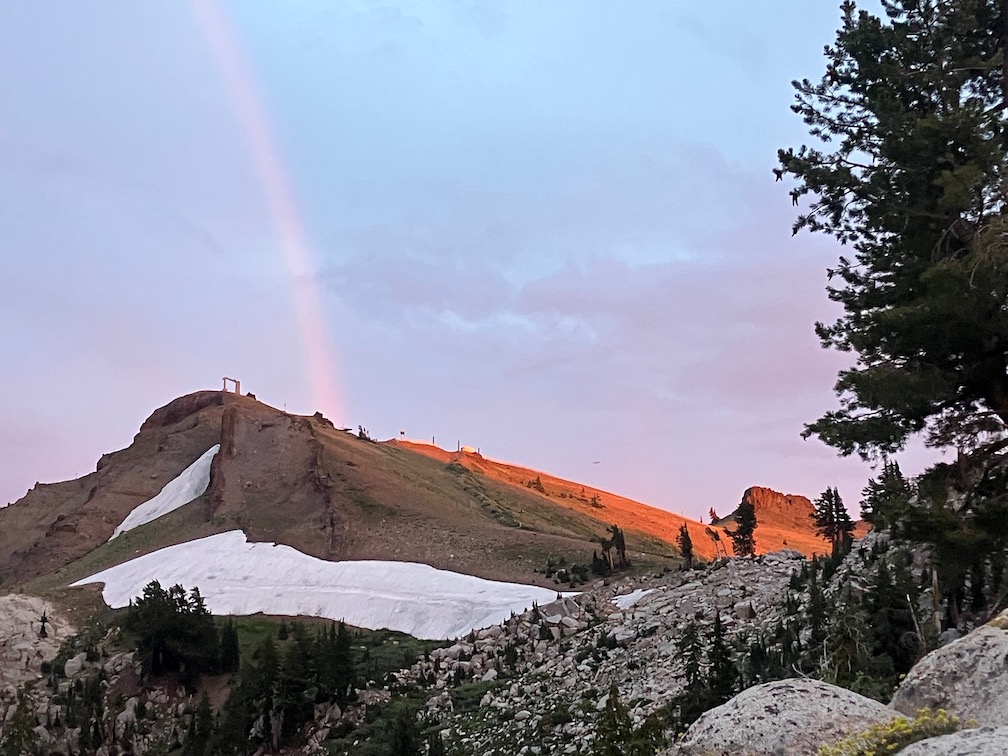
Heading south along the PCT, I stopped for the night just south of the meadow that is the headwaters of Washeshu Creek. It had been raining lightly off and on through the afternoon, but mostly cleared by sunset, with a rainbow. However, it rained lightly for several hours during the night. It is unusual for it to rain during the night in the Sierra, as most thunderstorms are afternoon and then clear by evening. In the morning, under mostly clear skies, I explored around the meadow beyond Granite Chief that is the source of Washeshu Creek.

rainbow at sunset over Washeshu Peak

In the morning I walked up to the top of Granite Chief (this is the full name of the peak, no peak or mountain qualifier). The rain had compacted the loose granitic soil enough that the walking was easy, despite the climb. From the top, spectacular views in all directions. I noticed a large camp in the dry meadow along the Middle Fork American River, and was curious about who and why, so I walked down the trail that I call Tevis Connector, to see what was up. The camp was for a large crew of Forest Service and California Conservation Corps (CCC) members. I talked for a while to the trail crew foreman. The project is to reroute the Tevis Cup trail out of the boggy areas to higher up the slope. Tevis Cup is the worst trail in the Granite Chief Wilderness, and one of the worst trails I’ve been on, so I am very happy to see it being addressed. He said this is a multi-year project. The project is based out of the American River Ranger District of Tahoe National Forest (Foresthill), which this area is on, though in the past the management of the wilderness has been the responsibility of the Truckee Ranger District.

This is the first trail crew I have noticed in the Granite Chief since 2009. The Forest Service has largely stopped doing routine trail maintenance, so trails, not just here, are declining rapidly. So I am glad to see the work being started, and glad that they picked the worst of the trails to address.

I found an old WS Trail sign along the Tevis Connector trail. The alignment of the Western States has changed many times over the years. The trail down PIcayune Valley is now the named route. I had found another sign years ago, but have not been able to find it again, so I presume someone took it as a souvenir. I have found these signs at a few obscure locations all the way from Galena Creek on the Nevada side to the Mosquito Ridge road.

I left the PCT to walk up to Little Needle Lake. This old trail is easier to follow now as the trail crew did some light work on it. From the lake (pond), I went up onto the ridge, which is a steep climb but not too hard, and headed south along the ridge. Some parts of the ridge show a vague use trail, some parts to do. The ridge is centrally located in the wilderness and therefore has some of the best views. I rejoined the Western States Trail near the saddle at the head of Picayune Valley, and headed down into the valley to my favorite campsite area.

Again, there were thunderstorms in the afternoon, which cleared, and then hours of light rain during the night.

I walked down to the junction with Middle Fork American River, exploring along the way, finding some old trails, and waterfalls along the creek, and visiting the reflecting pond near the Middle Fork – Picayune junction. Flowers are very thick in the wet meadow areas along the trail, with mountain larkspur more common than most years. Hundreds of hummingbird moths (white-lined sphinx moth Hyles lineata) were nectaring on the larkspur. In the wet areas, the growth is so lush it completely obscures the trail, and one has to feel the tread with your feet. Which has its risks, at it can conceal step ups and holes and branches and down trees and standing water.

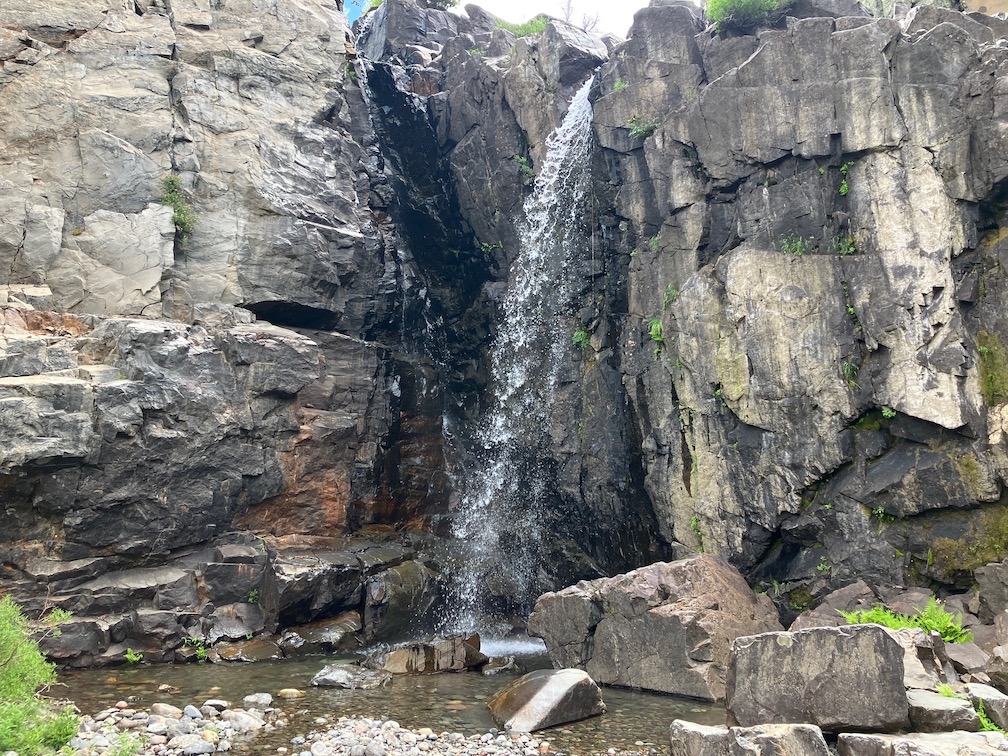
I found several waterfalls that I did not know existed. Travel along the creek is difficult to impossible, but there are many opportunities to drop down to the creek. I was of course also in search of the petroglyph panels, but again, did not find them. The success in finding them is about one-third, even though I have a clear picture in my mind of the setting.

The second night in Picayune was very similar, afternoon thunderstorms and then light rain during the early night.

I headed up out of Picayune Valley the next day, and ran into other people. Todd is a horseman who volunteers to cut trees on trails that otherwise are not getting any maintenance. We talked for a while about the history of some of the trails. Also met two backpackers from Grass Valley, and we were surprised to see each other. I was the first they had seen on their trip, and they were the first I’d seen, other than the trail crew. They had come in Greyhorse, and said the trail was very hard to find. I had done some spot brushing on this trail not too long ago (but can’t locate the date), but those areas may have brushed in again, and maybe been joined by other areas. They had come to the saddle from the Shanks Cove trail northern section, and said it was better though still had snow patches.

I headed towards camp at Whiskey Creek Camp, and as I came down from the ridge, the skies southeast were darkening to black, the main crest completely obscured. With just brief showers, I made it almost all the way, but then the skies opened. It rained hard for 30 minutes, and by hard, I mean visibility was about 50 feet. I partly sheltered under a leaning red fir. This is the most intense thunderstorm I have ever experienced in this wilderness. Perhaps more in the Carson Range, and certainly more in the desert southwest, but not here. After the storm I proceeded to camp and set up my tent. That is the point at which I discovered that my tent footprint and bottom are no longer waterproof. There was standing water everywhere, and it soaked through. I fortunately have a water resistant down sleeping bag, so was able to stay warm through the night, but everything was wet. And it rained again for three of hours during the night.

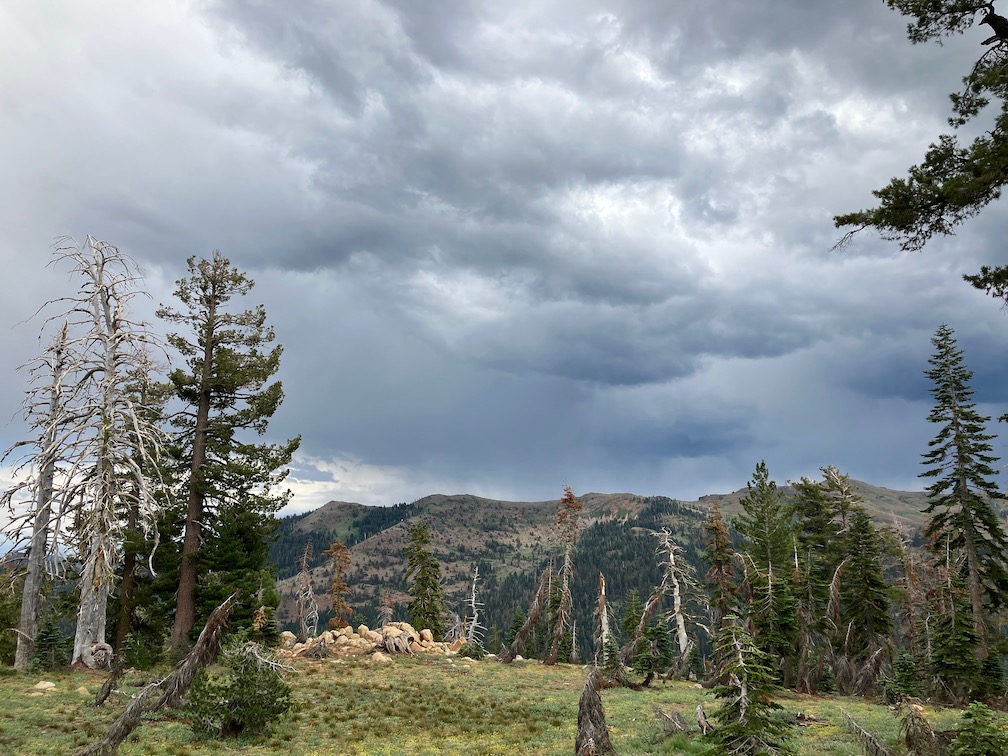
dark clouds over Sierra crest

At dawn, the sky was dark with clouds, and I assumed, correctly, that the sun was not going to come out, so I hiked out to Alpine Meadows trailhead, walked to Olympic Valley, caught the TART bus to Truckee, and the Amtrak bus home.

I do not know whether all the rain I experienced was part of the Hilary storm. Maybe not, because it didn’t really hit northern California until Sunday. I do know that different weather apps gave very different forecasts for those days. Accuweather was the most accurate.

Trail conditions:

  • Granite Chief Trail: Good condition, down trees already cut, very little brush.
  • PCT from Granite Chief Trail to Tevis Connection Trail: Good condition, one down tree, very little brush. Note that I did not hike the PCT from Tevis Connection Trail to Whiskey Creek Camp Trail, so nothing to report.
  • Western States Trail, Middle Fork American River to Whiskey Creek Camp: Many trees down, all easy to step over or bypass for hikers, but one tree on the switchbacks that probably cannot be safely passed by equestrians. Some areas need brushing, particularly towards Whiskey Creek Camp where the whitethorn is growing like crazy.
  • Five Lakes Trail: Good condition, very little brush.

PCT & Picayune 2022-07

This was my first trip of the season, probably the latest I’ve ever started. I had been doing a lot of short backpack trips along the Bay Area Ridge Trail, intending to complete that trail in a single year, but now taking a break because it is just too hot there. And I’ve been traveling and dancing a bit, which left shorter periods of few days for backpacking in the Sierra.

I went in at Palisades Tahoe on the Granite Chief Trail. This trail has been adopted by Truckee Trails, and is being appropriately maintained, so I’m scratching that one off my list of trails that I need to maintain. I headed south along the Pacific Crest Trail (PCT), over Granite Chief saddle and down Whiskey Creek drainage. I camped near Whiskey Creek Camp, and had a nice long conversation with five people camped there, parents, two children on their first backpack trip, and a friend from Chicago.

The next morning it was a little smokey, so I hung out and it didn’t seem to be getting worse, so I headed out the Western States Trail toward Picayune Valley. And then the smoke really came in! The Five Lakes Creek drainage was completely filled with dense smoke, and the ridgelines barely visible. So I sat it out for quite a while. When it thinned a little, I headed to Picayune Valley, wearing my N-95 mask, to one of my favorite camp spots.

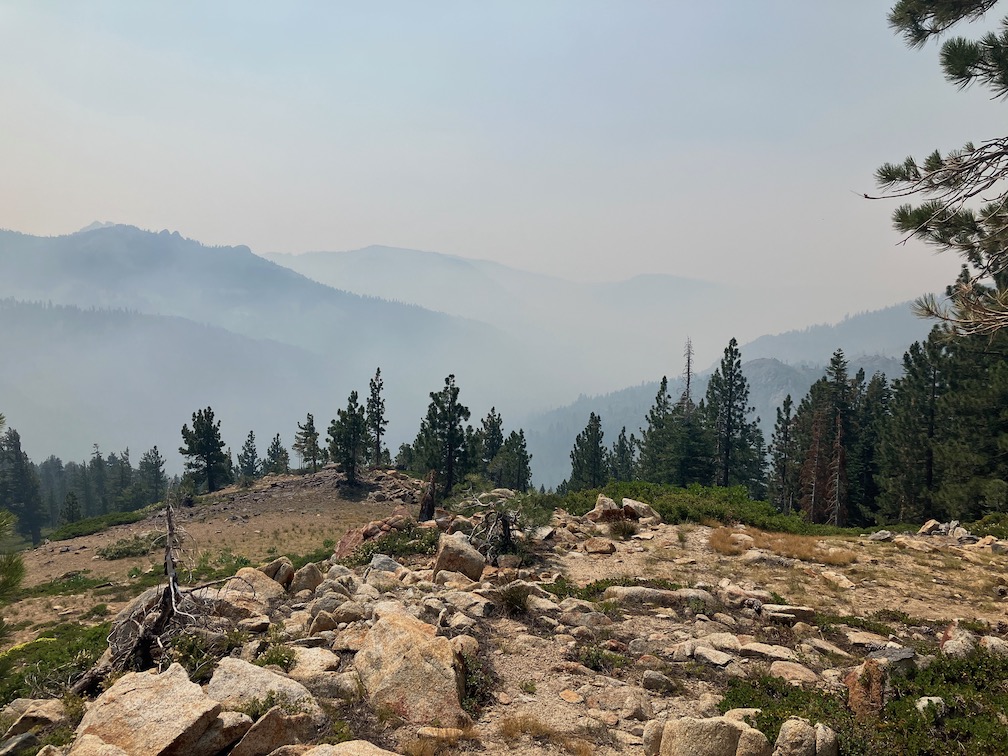
smoke in Five Lakes Creek basin

The smoke mostly cleared in the evening, and the stars were good. Next morning I walked the rest of the trail down to Talbot trailhead. The wet meadows and seep areas along the trail were chock-full of flowers. Because the trail is not getting much use, the soft vegetation crowds in and obscures the trail tread, but is easy to push through.

I had partly headed to Picayune in an effort to get away from the smoke, which I figured might be less further west, if the smoke plume location was correct. But the next day was mostly clear, so I went back out and back to Whiskey Creek Camp area. The smoke was from the Oak Fire in Mariposa County.

Next day I continued my way south on the PCT to Barker Pass. Though I’d seen very few PCT thru hikers previously, that day there were a more ‘normal’ number, about 70. I headed down the Blackwood Canyon jeep trail and camped near Blackwood Campground. The campground is no longer free ($17/night for a campground without water and trash service!), and the Lake Tahoe Basin has outlawed backcountry camping. Not sure what the rationale is, but the effect is to discriminate against people of low and moderate income. Of course I believe that people have a right to travel over the earth, and to camp where they need to camp, and that is what I do no matter what the bureaucrat bean-counters think.

There are alot of red firs (Abies magnifica) dead, sometimes in clusters, and sometimes individuals. They seem to die branch by branch until they are completely dead. It looks as though middle aged trees and the most susceptible, not so much young trees and very old ones. Though there are also dead white firs, the red firs are particularly noticeable because of the intense reddish brown of the needles. The primary cause seems to be prolonged drought and over-abundance of trees (due to fire suppression). Once weakened by drought, they are susceptible to root rot, mistletoe, fungus, and bark beetles.

Small and seasonal creeks are dry. Medium creeks are low but still flowing well. Wet meadow and seep areas are still green and wet, but drier ridge areas and crispy dry. Flowers are abundant in wet or moist areas, but long gone in drier areas. The two most common species of flowers are pennyroyal and yampah.

The trails I walked on this trip are in pretty good condition. Light to moderate winter debris. A few down trees, almost all easy to step over or bypass. The one tree that might not be able to be bypassed by equestrians is on the switchback down from the saddle into Picayune Valley. There are a few places that could use spot brushing, though the alder wet area on the PCT at the crossing of the Middle Fork really needs brushing.

I did something on this trip that I’d not done in years – I took a paperback novel to read. I’ve listened to books, with Audible, but my iPhone battery runs down pretty quickly. I rather enjoyed hold a book in my hands!

I’ve had for a couple of years the idea of creating a digital presentation or book on the flowers of the wilderness. So I took a lot of flower photos on this trip. Not everything, and of course missed the early season flowers. I’m better labeling them than I have before, with common name (if I can figure it out), species name, and plant family. I’m hoping that when I get to the project, that will make it easier. I’m using primarily Sierra Nevada Wildflowers, Karen Wiese, Falcon Press (Kindle edition); and Wildflowers of Nevada and Placer Counties, California, Redbud Chapter of California Native Plant Society. macOS Photos app now makes suggestions for photos that contain one flower. Sometimes the suggestion are exactly right, sometimes they are good to the genus level, and sometimes they are completely wrong. It is interesting to check, but the lookup is rather slow.

Mule Ears, Wyethia mollis, Asteraceae

Back in tomorrow!

PCT & Powderhorn 2021-06

The Granite Chief Trail, up from Squaw Valley to the PCT, is in good condition. A sign indicates it has been adopted by the Truckee Trails Association, so this is one trail I probably won’t have to maintain again. Yay!

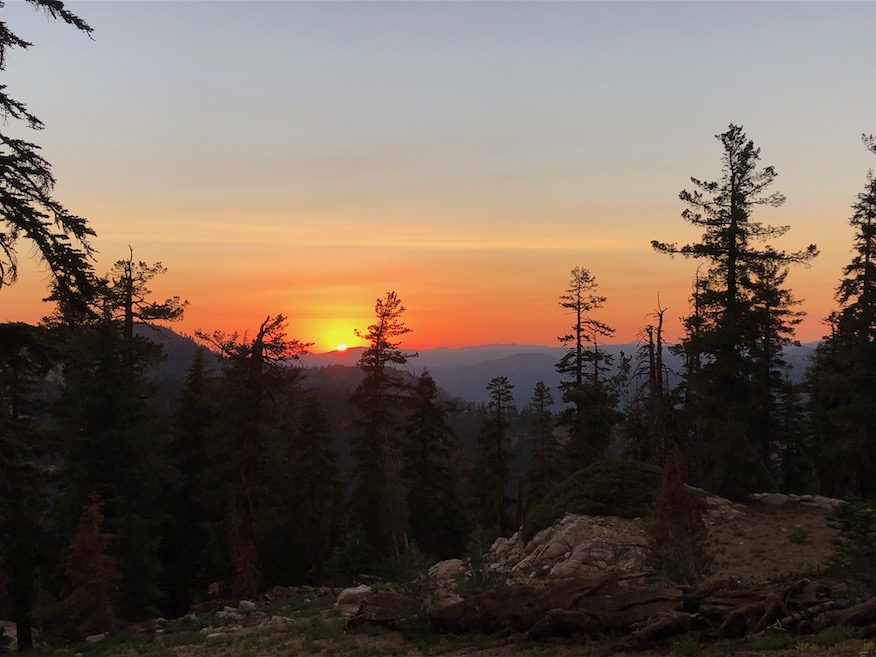
I camped just off the PCT, looking down the North Fork American River canyon, with a good sunset and sunrise, probably in part due to some fire smoke from fires to the north. There are still some patches of snow on the north side of Lyon Peak ridge (Foresthill Divide), but not much left. I walked the PCT south to the junction of the PCT and TRT, where there is a campsite well used by thru hikers and others. I’m seeing about 40 thru hikers a day, mostly in bunches but some solo. As is typical, about half look happy to be there and the other half clearly does not. It is a strange thing that people do.

sunset over North Fork American River

I headed south on the PCT to Barker Pass, then along Forest Highway 3 to Powderhorn trailhead, and down to Diamond Crossing. There are a number of trees down on this trail, though all but one were easy to go over or around, and it could definitely use brushing and cutting back of the doghair firs that crowd the trail.

I helped two dayhikers, in from Powderhorn, to find the pools along Five Lakes Creek near Diamond Crossing, which they would not likely have found on their own. The Five Lakes Creek Trail is in poor condition, many trees down, many of them down now for years. The Forest Service has not maintained this trail in at least six years, and it was being somewhat maintained by a horse group that headed into Big Spring meadow every year, but seems to have given up on using the trail, it is so bad.

I camped at Big Spring meadow, one of my favorite spots, a great place to watch the beginning of the day and the end of the day, and enjoy the huge pines. The meadow is drier than usual for this time of year, but not fall dry. The spring is flowing well, and I don’t think it ever dries up. I explored up the east side of Five Lakes Creek, finding the old trail which used to be on that side. Some parts are easy to see, in the wet areas with willow alder and willow thickets, not, and I did not find the place where it crosses over to the west side. I’ve also explored down from the PCT/Five Lakes junction, but haven’t yet connected the two.

Big Spring meadow

I hung out at Whiskey Creek Camp to meet Paul Vandervoort, who I’ve been emailing for several years but never met. He was leading a dayhiking group from Reno, going over into Picayune Valley and then climbing out to the Tevis Cup Trail, and back out.

I headed out the Five Lakes Creek Trail, PCT, and Five Lakes Trail, with some exploring around the Five Lakes area, which I usually zoom by on my way elsewhere. The lakes were low but most still had water. There are anywhere from three lakes to fifteen lakes, depending on the time of year. The largest lake, the one to the west, breaks into two lakes as the water level drops, and the one I call third lake gets smaller but I’ve not seen it dry.

From there I went up over the old Squaw Saddle Trail, no longer maintained, and into Squaw Valley. It joins the Western States Trail (one of the many alignments) and heads east along the south side of the valley. Where the trail is closed for construction of the new Alpine to Squaw gondola, I dropped down to Squaw Village and hung out there for a while.

I took the bus into Tahoe City, where I camp out for the night before going to Truckee in the morning to catch the train. It is far too noisy in Truckee to sleep out, due to Interstate 80 with its constant roar of truck traffic. Tahoe City is much quieter. While charging my phone at the plaza overlook, a band came and set up to play, so I stayed to enjoy there semi-reggae and talk to people.

I was wondering how the flowers would be in the drought year. At higher elevations, they actually don’t seem much different, except that they are about half the stature of a ‘normal’ year. Their abundance is about the same, though.

Arrowleaf Balsamroot (Balsamhoriza)

On this trip I did not take insect repellent, and did not take my inner tent with insect netting, so was quite bothered by mosquitoes. If it were cooler, I’d just hide in my sleeping bag and go to sleep, but the evenings were too warm to do that. They are not as thick as they used to be, but still…

I have some new hiking shoes. For years my toes have been turning, and as a result, I need a wider toe box, but my heel is not widening, so wide shoes don’t do it for me. I’m trying out Altra Lone Peak trail runner shoes. They have a wide toe box but normal width elsewhere. They aren’t really heavy enough for hiking shoes, so I probably won’t be doing any off-trail hiking in them, but I have to say, my toes were happy.

Photos on Flickr: https://www.flickr.com/photos/allisondan/albums/72157719601028882; Granite Chief collection on Flickr: https://www.flickr.com/photos/allisondan/collections/72157637640215275/
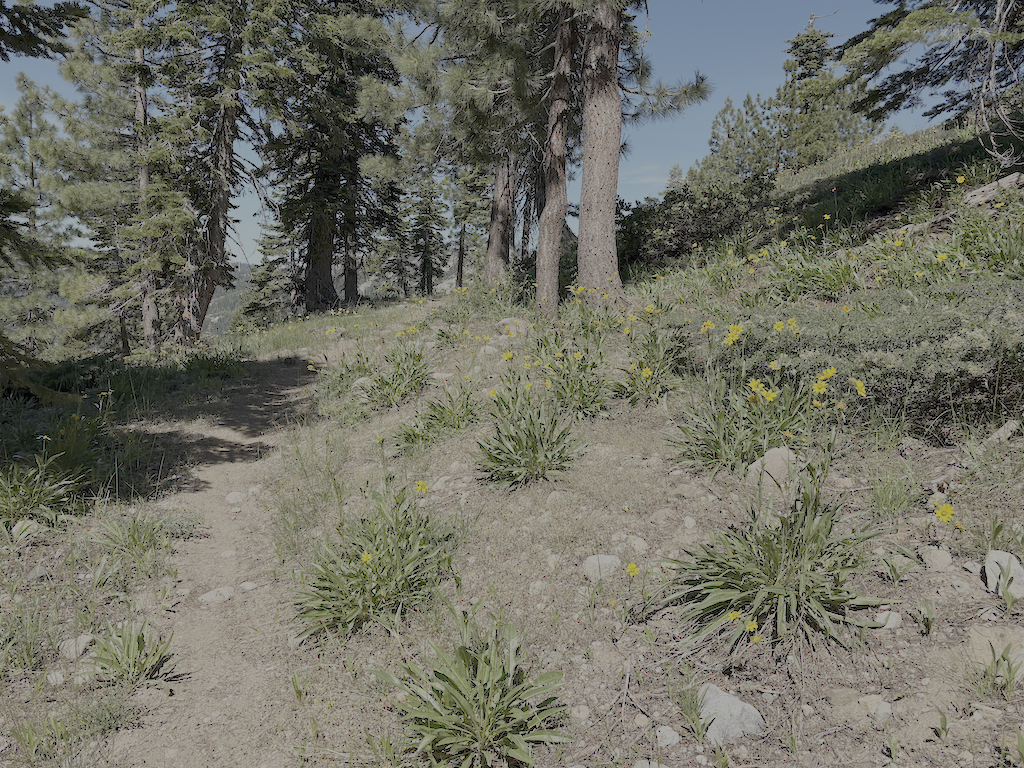
Picayune 2018-07

Last week I went in to the Granite Chief Wilderness at Granite Chief Trail, from Squaw Valley, and camped on top of Granite Chief (9018 feet). The wind howled all night, probably 30-40 mph, so I didn’t sleep much, but the stars were brilliant and the sunset and sunrise worthwhile.

Several times in the days leading up to the trip and even on the trip, I changed my plans about where I was going to go. I headed to Whiskey Creek Camp and on towards Picayune Valley, on the Western States Trail. The trail is in general in good condition, though I did brushing of whitethorn on about 30 feet of trail that was brushed in. Whitethorn requires a sacrifice of blood, as the thorn inevitably find their way to bare skin no matter how careful I am.

The section just below PIcayune saddle as the trail drops into the valley, however, is a total mess of downed trees. It took me quite a while to figure out where the trail even went. And below that it is pretty brushy for a ways. And below that, in good condition again. Some group has been doing trail work in the valley, light brushing and some tread work, and that is appreciated.

I camped at my favorite Picayune Valley campsite, right beside the creek on a sandy patch, with all the sky open to stars at night. Though it clouded up and there were fewer stars than the night before. The next day I walked out to the trailhead, so see what trail conditions are. Good. Talked to several day hikers, as this trail gets more day hike use than overnight use. The wilderness boundary sign has been moved to the new location, just east of the Talbot Trailhead. These lands were purchased by the American River Conservancy and have been added to the wilderness, so there is now a mile of additional wilderness trail here. Of course the lands have been logged and it will be years before it looks like wilderness again, but this is the first step to restoration.

While on the dayhike, it occurred to me that maybe now, with relatively cool weather for the summer, and no specific plans, I should hike the ADT-CA-3 section of the American Discovery Trail, which is the extension of the Western States Trail  westward. So I grabbed my pack and hiked out, to Lewis Campground, from which my trip continues at https://allisondan.blog/2018/07/10/adt-ca-3-2018-07/.

Photos on Flickr: https://www.flickr.com/photos/allisondan/albums/72157698464067794


finally! 2017-07

My latest trip was primarily for trail maintenance on the PCT, and after  11 years, I feel caught up. I removed the last brushed-in section, between what I call Two Towers (Lord of the Rings reference) and Twin Peaks. Of course in order to get done, I had to accept many places that could use brushing, and leave them for the future. In particular, the pine mat manzanita and sagebrush is pushing into the trail and narrowing the tread. It isn’t hard to clear, but is a lot of detailed work that I’ve often put off “for next year.”

The reason I pick this part of the PCT to work on every year is not just that it needs brushing, but that I so love spending time on this ridge. The views east are spectacular, over Lake Tahoe and the weather over the Carson Range, often thunderstorms developing when the main crest is clear. The views west are intriguing, down into the wilderness, where the real wilderness is, and beyond, to the coast ranges. When the valley air is clear, not often, the details of the coast range and Bay Area are clear, and at night the lights in the valley, kind of neat at a distance. Usually thunderstorms develop over Nevada, the Carson Range, and sometimes move west to the crest, but on Wednesday moisture coming from the west developed some thunderheads, thunder, and light rain for a half hour, while the Carson Range was mostly clear. 

When there is snow on the ridge, usually in banks on the east just below the ridge where it gets blown during the winter in strong winds, I can melt snow and stay up here for many days. I use my black Jetboil pot to melt, and I can keep up with my daily use if I stay on top of the melting. 

I went in on the Granite Chief Trail from Squaw Valley, which has a few trees down but easy to get around, then south along the PCT. Granite Chief saddle has a lot of snow on the north side, but the route is not hard to find. People southbound rarely have problems here, but many northbound hikers drop too far down into Shirley Canyon and have a hard time finding the trail again. The trail from the saddle south to the TRT/PCT junction is in good condition, a few tress down but surprisingly few, some trail erosion but not bad. 

I hiked out the TRT to Tahoe City, so don’t have anything to report about the TRT/PCT south to Barker Pass, but I’d guess many snow banks but no big issues. Other than snow banks on the upper portion, the TRT trail down into Ward Creek and Tahoe City is in good condition, having been logged out already by a TRTA trail crew. 

The PCT thru hikers are out in force, but interestingly, about half were going south, having skipped over the high Sierra to Donner or even Ashland and now heading south to pick up the section with somewhat less snow. Looking into the Desolation Wilderness, however, snow there is still deep and must be much deeper at high elevations to the south. Dicks Pass is 9400, but the highest pass on the PCT is 13,143, Forester Pass. There were people who had come through the high Sierra headed north, but I have to say that they all looked beat and not very happy. I think the route flippers were much happier. 

The next big project on my list, for next year, is to work on the Powderhorn Trail. If anyone hikes that and has conditions to report, please do so. I think the middle section is in horrible condition, brushed closed in spots, but I haven’t been there in two years, so I’m guessing. 

Photos on Flickr (more later, these are ones from my iPhone which are easy to upload, but I also used my regular camera)

Granite Chief 2016-08

Note: this trip is LAST year, 2016, which I never got around to finishing, but here it is now. I like to post on every trip, in part so that I myself can keep track of trips and where I went. 

A dry year, dogbane turns color early

I went in at Squaw Valley (bus stop) and up Granite Chief Trail to Granite Chief saddle  where I camped for the night. The next day I walked out the Tevis Cup Trail and what I call the Tevis Cup Connector, one of the old Western States Trail alignments. Tevis Cup is easy to follow and has great views, but the trail itself is unpleasant,  climbing and descending repeatedly for no good reason, and poorly maintained. The end of the trail has been re-aligned off a gravel road onto a trail that goes past old ranch or FS buildings (not sure which), but ends at the same green gate as the old route. The Tevis Cup Connector is faded and jhard to follow in some places, as it descends and crosses the Middle Fork American River and then climbs to join the Tevis Cup. 

I headed south on the PCT, doing some spot brushing along the way, and continued to Barker Pass, to Powderhorn Trail and back into the wilderness. Powderhorn is in decent shape on the upper third and lower third, but almost completely brushed in in the middle third, with whitethorn and doghair fir. I camped at Diamond Crossing, explored Bear Pen trail which I’d not beeen on in several years. It is in decent shape, not too hard to follow, but where it crosses Bear Pen Creek before the meadow, eroded banks make it necessary to climb down and back up, awkward with a pack. 

Some sort of bee or wasp is incredible abundant, everywhere but particularly along the edges of creeks. Yellow and black striped body, but no fuzziness and no constriction between the thorax and abdomen. Not sure what it is. Also saw a lot of grouse on this trip, at least 40. 

I went out Five Lakes Creek Trail, which has received some logging out, perhaps by the horse trip that comes in once a year to a Big Spring meadow, and then out to the Five Lakes trailhead. And back to Truckee by bus and back home on the train. 

Photos on Flickr; Granite Chief collection

First trip 2012-06

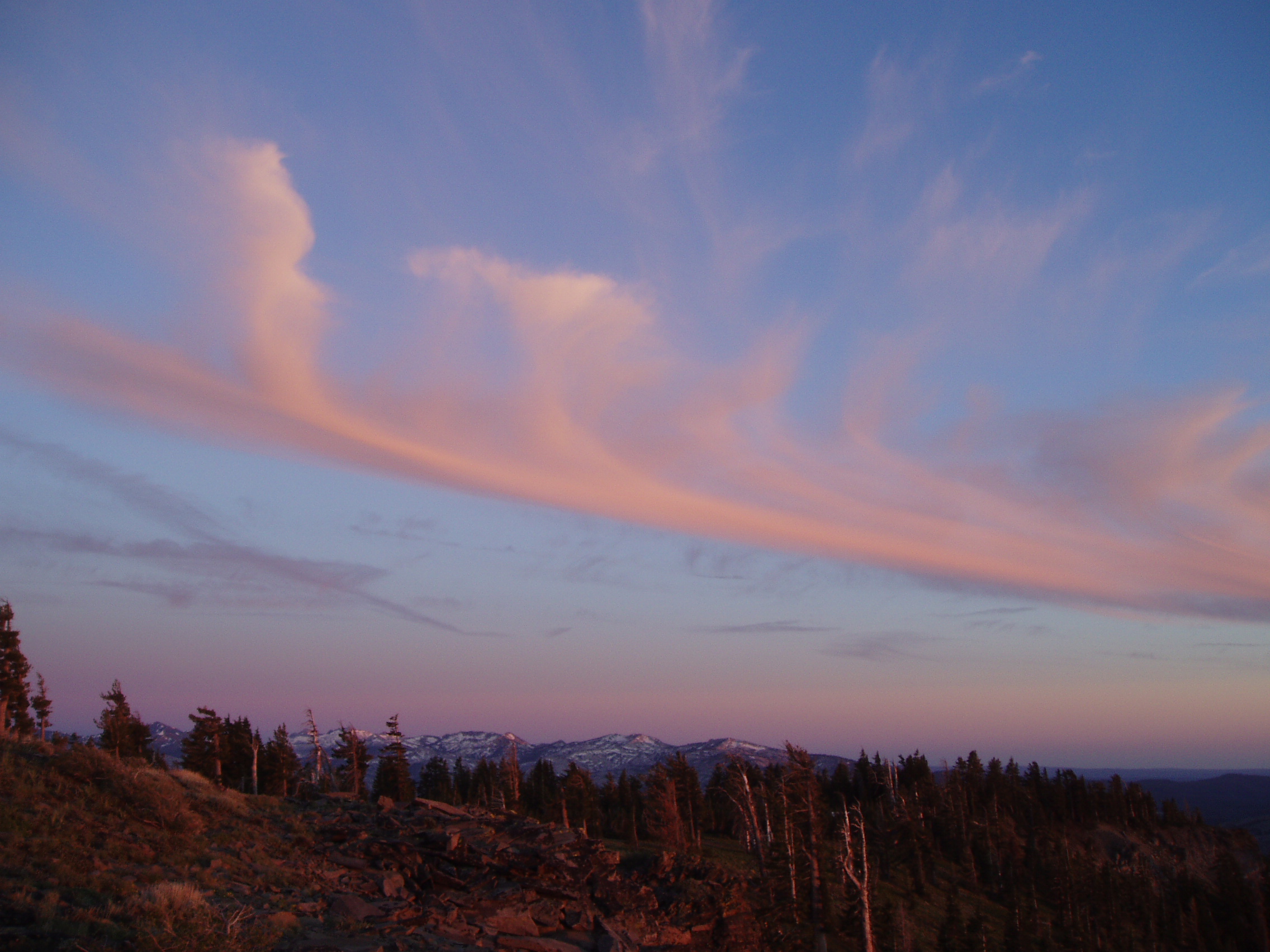
jetstream clouds at sunset

I did my first trip through the wilderness June 24-27. How much difference a year makes! Last year, a month later, I was crossing regular patches of snow on the trail, and sometimes walking on snow for long distances, but this year I only crossed a couple of patches. Last year the creeks were so high that they were difficult or impossible to cross, this year all were easily crossed.

I went in at Granite Chief Trail, and did an afternoon’s work brushing the trail, and then much of the next day. I’ve completed the portion to about half way up where the trail crosses a creek near a mules ears meadow. Probably another day’s work yet to do to finish it off to the top. Huckleberry oak, white thorn, and pine mat manzanita have died back in a number of places along the trail. Is it from too much snow last year, or too little this year, or some other reason? I camped out on a granite ledge that hangs over Squaw Creek canyon, but slept very little with the wind howling all night.

Continue reading