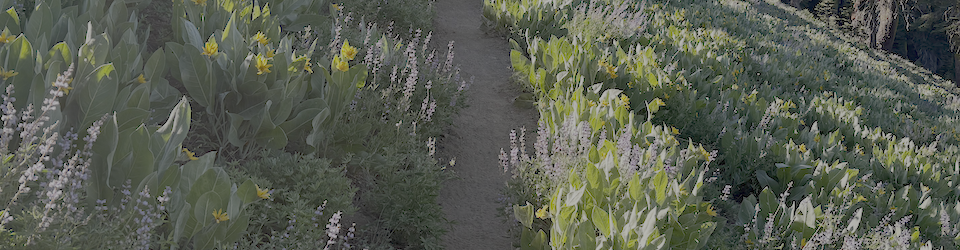
This was my first trip of the season, probably the latest I’ve ever started. I had been doing a lot of short backpack trips along the Bay Area Ridge Trail, intending to complete that trail in a single year, but now taking a break because it is just too hot there. And I’ve been traveling and dancing a bit, which left shorter periods of few days for backpacking in the Sierra.
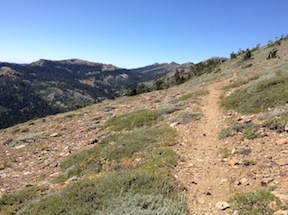
I went in at Palisades Tahoe on the Granite Chief Trail. This trail has been adopted by Truckee Trails, and is being appropriately maintained, so I’m scratching that one off my list of trails that I need to maintain. I headed south along the Pacific Crest Trail (PCT), over Granite Chief saddle and down Whiskey Creek drainage. I camped near Whiskey Creek Camp, and had a nice long conversation with five people camped there, parents, two children on their first backpack trip, and a friend from Chicago.
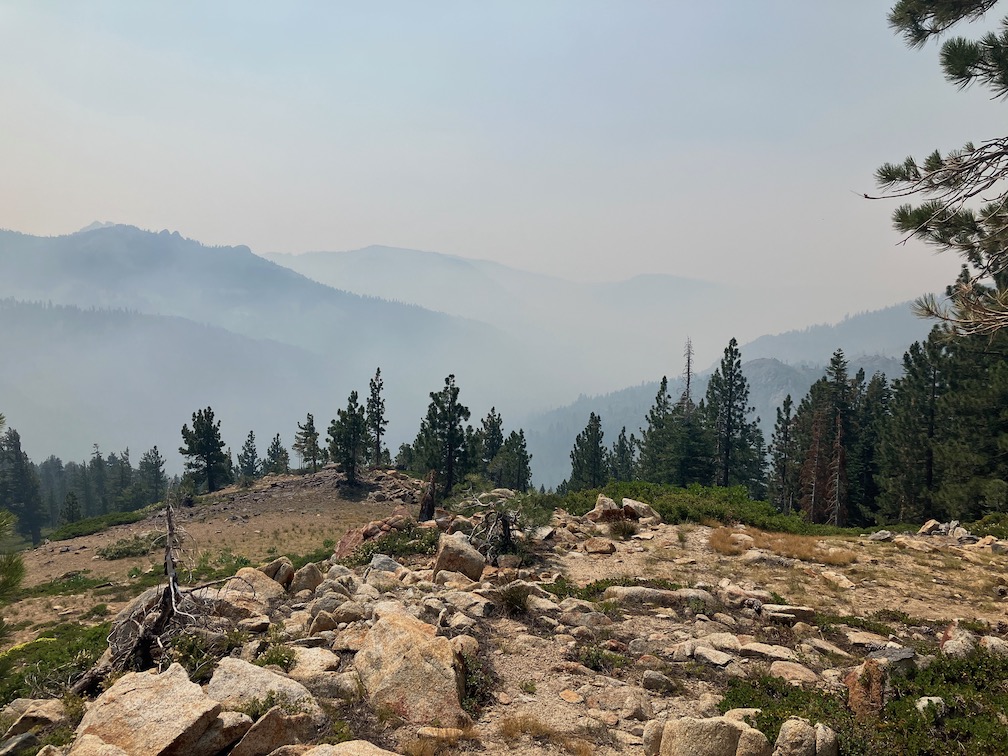
The next morning it was a little smokey, so I hung out and it didn’t seem to be getting worse, so I headed out the Western States Trail toward Picayune Valley. And then the smoke really came in! The Five Lakes Creek drainage was completely filled with dense smoke, and the ridgelines barely visible. So I sat it out for quite a while. When it thinned a little, I headed to Picayune Valley, wearing my N-95 mask, to one of my favorite camp spots.
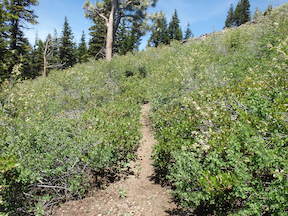
The smoke mostly cleared in the evening, and the stars were good. Next morning I walked the rest of the trail down to Talbot trailhead. The wet meadows and seep areas along the trail were chock-full of flowers. Because the trail is not getting much use, the soft vegetation crowds in and obscures the trail tread, but is easy to push through.
I had partly headed to Picayune in an effort to get away from the smoke, which I figured might be less further west, if the smoke plume location was correct. But the next day was mostly clear, so I went back out and back to Whiskey Creek Camp area. The smoke was from the Oak Fire in Mariposa County.
Next day I continued my way south on the PCT to Barker Pass. Though I’d seen very few PCT thru hikers previously, that day there were a more ‘normal’ number, about 70. I headed down the Blackwood Canyon jeep trail and camped near Blackwood Campground. The campground is no longer free ($17/night for a campground without water and trash service!), and the Lake Tahoe Basin has outlawed backcountry camping. Not sure what the rationale is, but the effect is to discriminate against people of low and moderate income. Of course I believe that people have a right to travel over the earth, and to camp where they need to camp, and that is what I do no matter what the bureaucrat bean-counters think.
There are alot of red firs (Abies magnifica) dead, sometimes in clusters, and sometimes individuals. They seem to die branch by branch until they are completely dead. It looks as though middle aged trees and the most susceptible, not so much young trees and very old ones. Though there are also dead white firs, the red firs are particularly noticeable because of the intense reddish brown of the needles. The primary cause seems to be prolonged drought and over-abundance of trees (due to fire suppression). Once weakened by drought, they are susceptible to root rot, mistletoe, fungus, and bark beetles.
Small and seasonal creeks are dry. Medium creeks are low but still flowing well. Wet meadow and seep areas are still green and wet, but drier ridge areas and crispy dry. Flowers are abundant in wet or moist areas, but long gone in drier areas. The two most common species of flowers are pennyroyal and yampah.
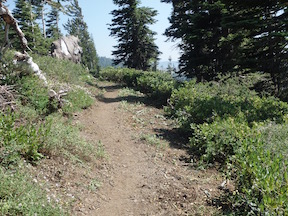
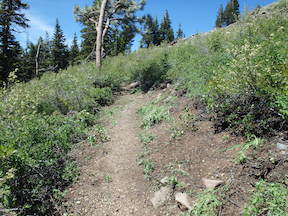
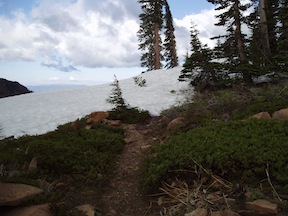
The trails I walked on this trip are in pretty good condition. Light to moderate winter debris. A few down trees, almost all easy to step over or bypass. The one tree that might not be able to be bypassed by equestrians is on the switchback down from the saddle into Picayune Valley. There are a few places that could use spot brushing, though the alder wet area on the PCT at the crossing of the Middle Fork really needs brushing.
I did something on this trip that I’d not done in years – I took a paperback novel to read. I’ve listened to books, with Audible, but my iPhone battery runs down pretty quickly. I rather enjoyed hold a book in my hands!
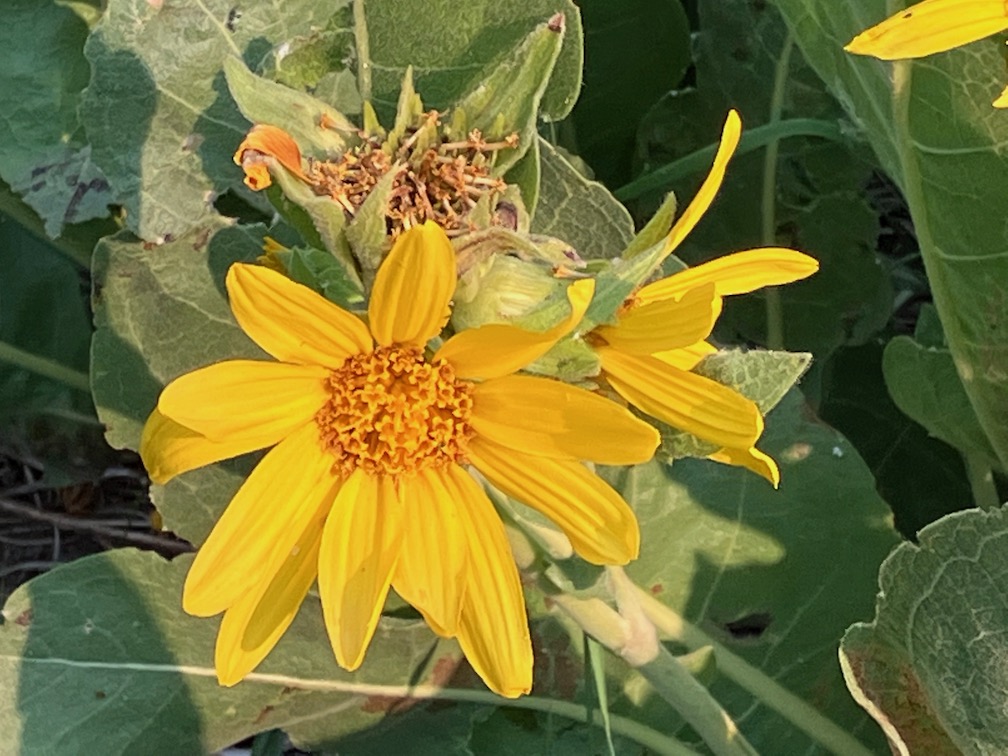
I’ve had for a couple of years the idea of creating a digital presentation or book on the flowers of the wilderness. So I took a lot of flower photos on this trip. Not everything, and of course missed the early season flowers. I’m better labeling them than I have before, with common name (if I can figure it out), species name, and plant family. I’m hoping that when I get to the project, that will make it easier. I’m using primarily Sierra Nevada Wildflowers, Karen Wiese, Falcon Press (Kindle edition); and Wildflowers of Nevada and Placer Counties, California, Redbud Chapter of California Native Plant Society. macOS Photos app now makes suggestions for photos that contain one flower. Sometimes the suggestion are exactly right, sometimes they are good to the genus level, and sometimes they are completely wrong. It is interesting to check, but the lookup is rather slow.
- Photos on Flickr: https://www.flickr.com/photos/allisondan/albums/72177720301114849
- Granite Chief collection on Flickr: https://www.flickr.com/photos/allisondan/collections/72157637640215275
Back in tomorrow!
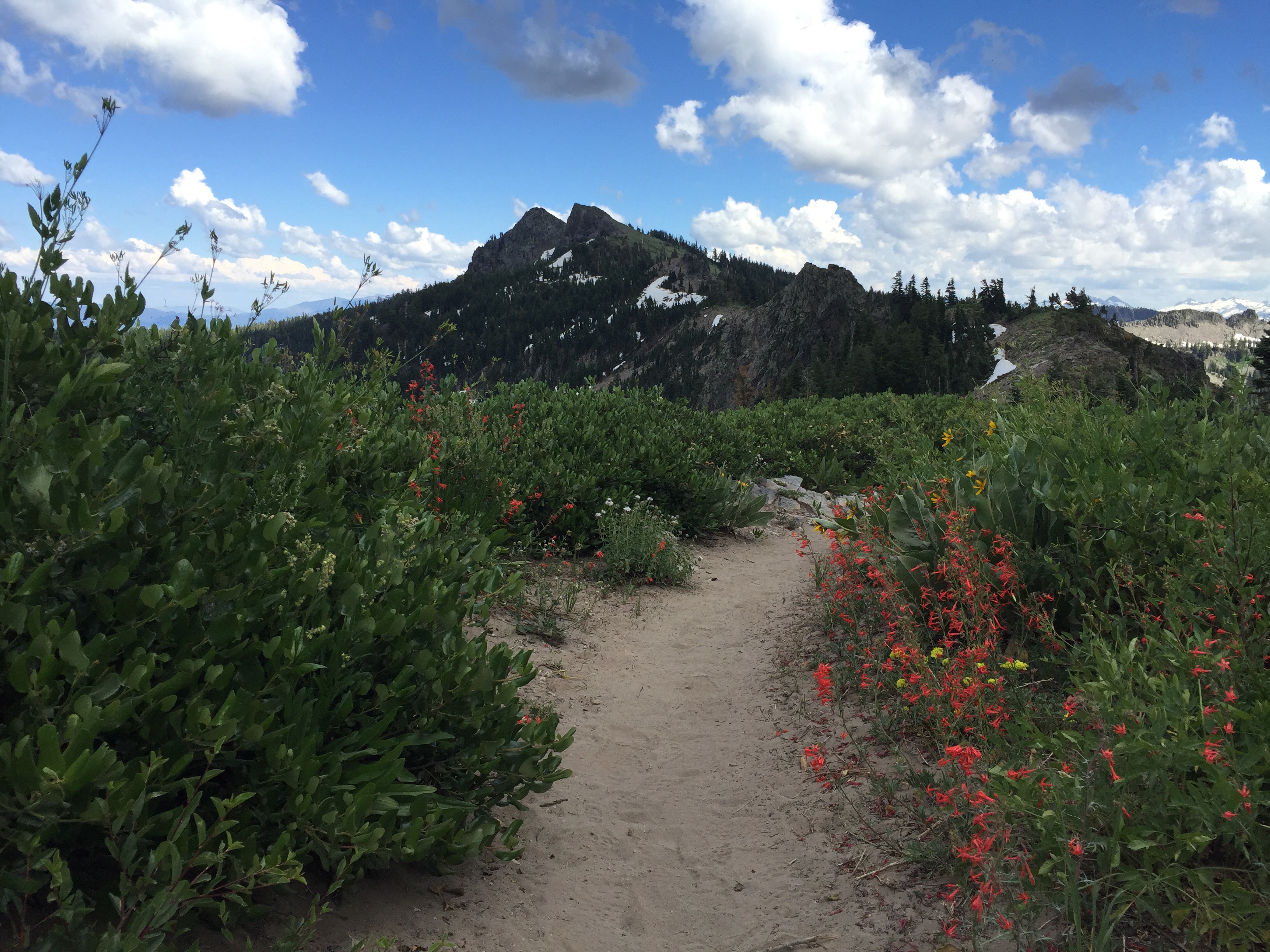

 Granite Chief Wilderness